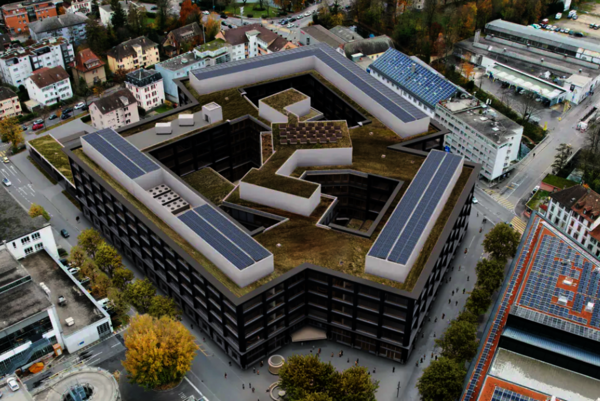
Projects at the interface of design and health are our core competency.
Interprofessional collaboration in the day surgery unit | Spital Emmental
Workshop on optimising communication, coordination and processes
How can collaboration, communication and processes in the operating theatre be further developed together? The SCDH is running an interactive workshop with around 70 staff members from Emmental Hospital, in which key areas of an outpatient surgical centre are simulated, experienced and discussed. The workshop provides a practical insight into how design and simulation methods help to identify spatial and organisational challenges at an early stage and to develop solutions together.
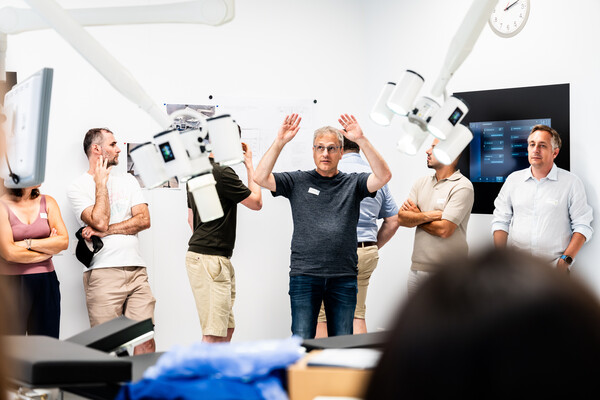
CAS Medication Safety
Input on simulation-based testing
Medication errors are among the most common adverse events in the healthcare sector. As part of the University of Bern’s CAS Medication Safety programme, the SCDH runs a half-day session comprising a presentation and workshop to show participants how simulations can help identify risks and improve medication safety.
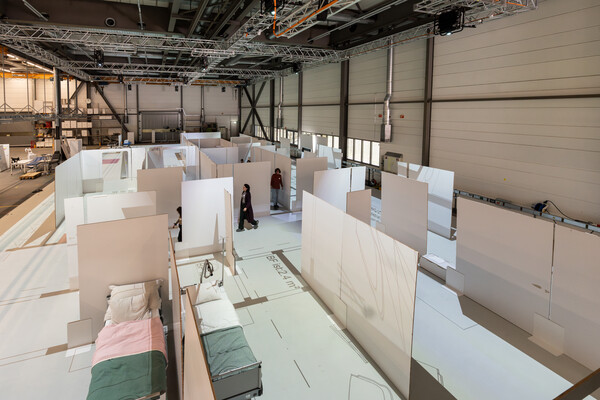
COALA – Coordination & Assistance for Living at Home | Swiss Center for Care@home
Conceptual design of a digital platform for coordinating regional support services in the care@home sector
How can care coordinators in heathcare networks find the right support services for people in need of care more quickly and reliably – thereby helping them to keep living independently at home for longer? The COALA project is investigating the ways in which digital networking and coordinated information systems can strengthen the care@home model in Switzerland. Together with partners in the areas of research, healthcare and innovation, the SCDH is developing a concept for a digital platform that makes regional support services more visible and provides targeted support for the coordination work of professionals in healthcare networks.
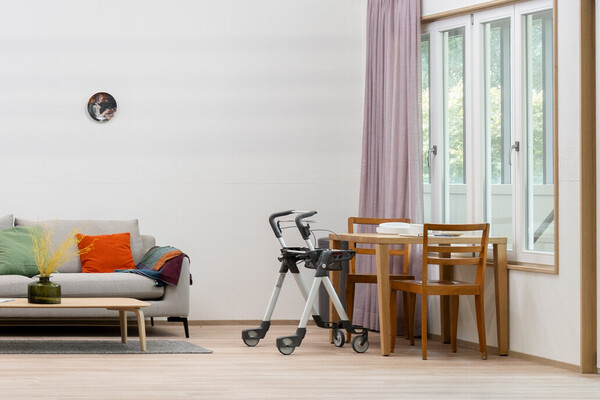
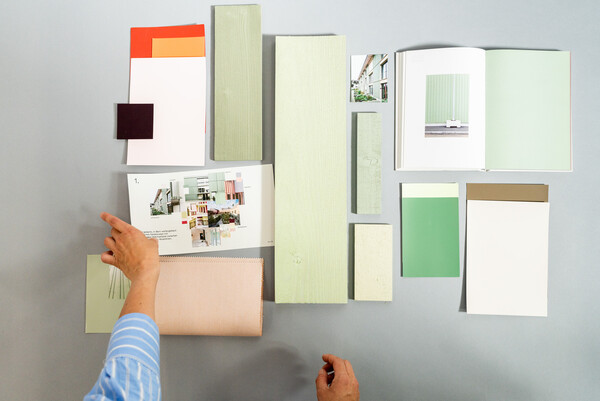
Renovation of two residential buildings | wbArchitekten
Concept for colour, materials, orientation and light
The two residential buildings belonging to the FAMBAU Co-operative on Blankweg in Ostermundigen (Bern) are being renovated. On behalf of wbArchitekten, SCDH is developing an overall concept for colour, materials, orientation and light. The aim is to enhance the buildings’ design, strengthen their identity, clearly distinguish them from the heterogeneous 1970s-style surroundings, and incorporate the needs of the occupants.
Outpatient gynaecological care | Inselspital Bern
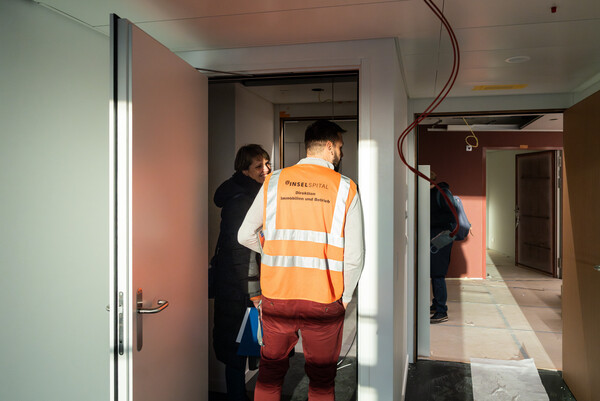
Participatory workshop on redesigning roles and processes
The relocation of the gynaecological outpatient clinics at the Inselspital Women’s Clinic to the Marie-Colinet-Haus presents an opportunity to rethink processes in outpatient gynaecological care. The SCDH is supporting the Women’s Clinic in the participatory redesign of roles, processes and interprofessional collaboration in the outpatient setting – using a structured workshop format that actively involves staff and delivers concrete, actionable results.
Enhancing timely access to acute psychiatric care@home for women after birth | Nursing Science Foundation Switzerland
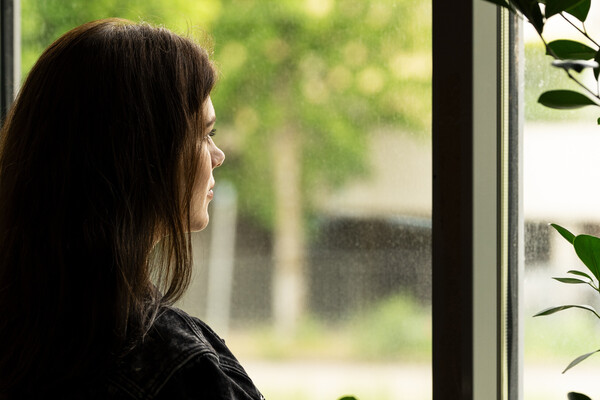
Development of a care@home model
Perinatal mental illness affects around 15% of women in Switzerland and often leads to inpatient treatment – frequently involving separation of mother and child. The SCDH is supporting researchers at Bern University of Applied Sciences, in collaboration with LerNetz AG, in developing an integrated care@home model that supports affected women in their home environment and enables continuous, interprofessional care.
Emergency triage at Triemli location | Stadtspital Zürich
Simulation-based evaluation of architecture and processes
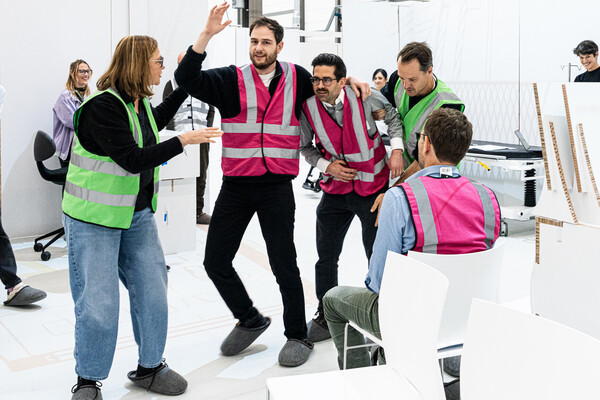
As the canton’s largest emergency centre, Zürich’s public hospital plays a key role for the delivery of acute care. The emergency triage unit at the hospital’s Triemli location is being modernized, both spatially and organisationally, in a project to be completed in 2027. The SCDH supports the hospital during the planning phase with a simulation-based evaluation of the architecture and the processes. In the simulation area, doctors, nursing personnel and other staff test out realistic emergency scenarios – ranging from peak activity, with multiple patients, to someone’s reanimation in the waiting room. In this way, processes and spatial layouts are assessed under realistic conditions, weaknesses identified early on and planning errors avoided. The SCDH’s services are financed through a Smart City Zürich innovation loan.
Circular children's shoes | NEUNOI
Development of a supply and return model for the first systematically repairable children's trainers
How can a product be designed so that it does not become a disposable item, but remains part of a functioning circular system? Together with the Zurich-based start-up NEUNOI, the SCDH is developing a supply and return model for the first systematically repairable children's trainers. The aim is to combine circular economy, health promotion and user-centred service design – as a basis for market entry in spring 2026.

Renovation of a nursing home | Stiftung Dessaules
Development of a colour concept
For the renovation of a care home belonging to the Dessaules Foundation, SCDH is developing an evidence-based colour concept that equally enhances orientation, well-being and identity. The aim is to create a calming design for the communal areas and alcoves leading to the residents' rooms, to repair wear and tear, and to create an atmospheric, nature-inspired environment for residents and care staff.
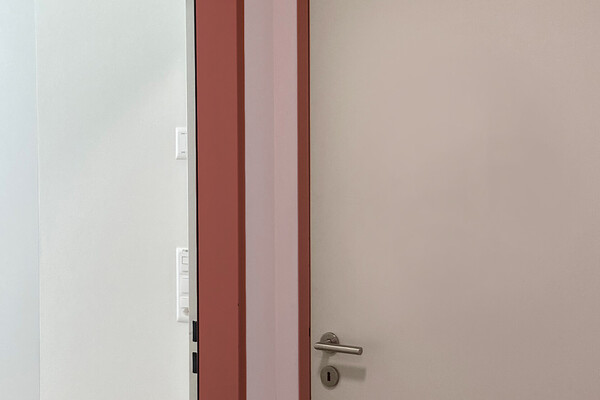
Colour shapes Learning | University of Applied Sciences and Arts Hildesheim
Pilot project on the effect of colour in learning spaces
The pilot project "Colour sets a precedent" is the first to investigate how different colour spectrums affect the well-being of pupils in learning environments. In the realistic test rooms in the SCDH Living Lab, colour concepts are made visible and tangible in order to measure their emotional impact under conditions that are true to life.
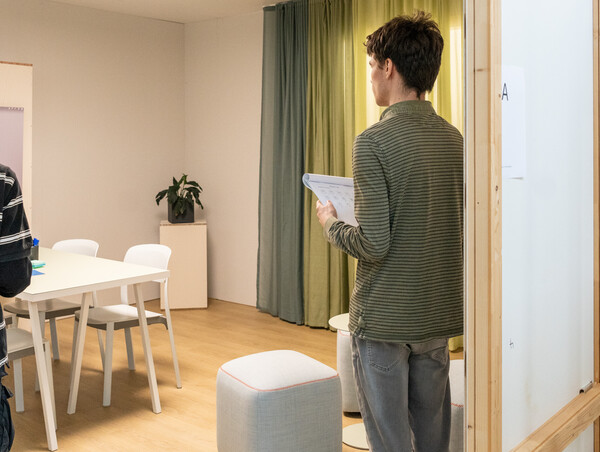
Lab of Horrors | Roche Diagnostics
Simulation-based evaluation of laboratory environments
The strategic organisation and setup of laboratories pose complex challenges. The "Lab of Horrors" workshop, which Roche Diagnostics held for invited customers at the SCDH Living Lab, demonstrated how realistic simulations can help optimise planned laboratory environments.
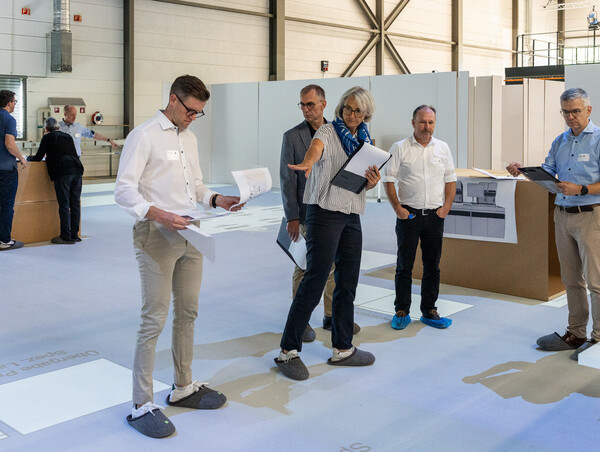
NIP-MedS: National Implementation Programme for Medication Safety
Development, review and implementation of measures to improve medication safety in three key areas
Medication errors pose significant risks to patients. The National Implementation Programme for Medication Safety (NIP-MedS) aims to ensure and improve medication safety throughout Switzerland in three key areas: safe handling of high-risk medications; reducing medication errors caused by confusion between medicines; safe management of medicines and medication when changes occur in the available drug supply.
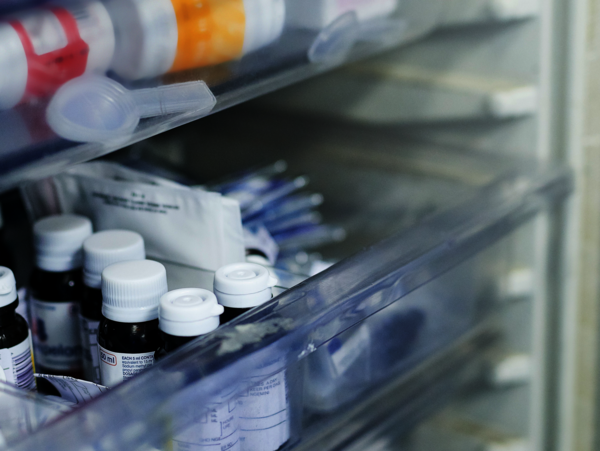
Design for Dignity | Bern University of Applied Sciences
Development of a modular and adaptable system to promote privacy in Asylum Centers
A modular and adaptable system to promote privacy in asylum centres improves the living conditions and well-being of refugees whilst also supporting staff working conditions. The SCDH is supporting the project – developed as part of the MA Design Entrepreneurship programme and funded by the Gebert Rüf Foundation – with expertise in material studies, prototyping and testing. ‘Design for Dignity’ is more than just a product: it is a statement for greater humanity – because dignity is a right for all people, and design can contribute to this.
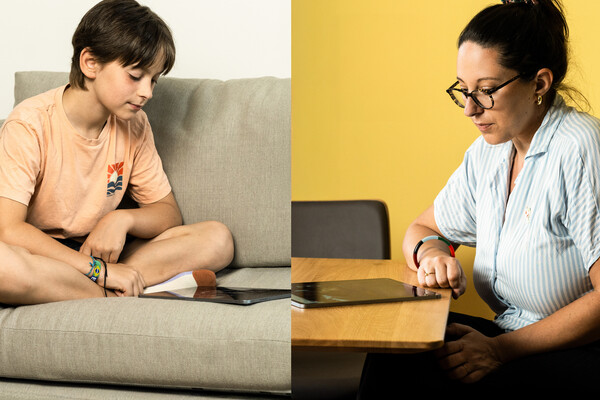
Being a parent | Palatin Stiftung
Development of a digital tool to support the participation of birth parents in the foster care system
Parents who cannot care for their children themselves live in great ambivalence. Shame, guilt, anger, sadness and fear are common feelings. Together with the parents of origin, the project is developing a participation tool that supports them in contributing to the successful upbringing of their children- despite physical distance.
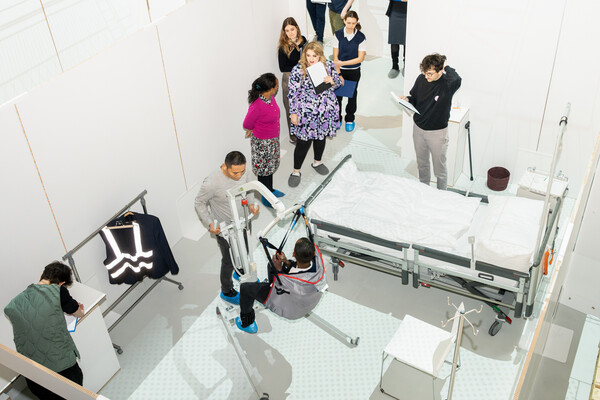
New residential facility |Humanitas Stiftung
Simulation-based assessment of accessibility and ergonomics of the working conditions
Humanitas Stiftung is a foundation that provides homes for people with disabilities. However, the existing residential building does not meet the requirements of the present day. The foundation is therefore building a modern, accessible residential facility in Horgen as a home for 44 residents. The SCDH supported the Humanitas Foundation during the planning phase with a simulation-based assessment of the accessibility and ergonomics and of the working conditions. In the simulation area, care professionals, the planning team and the builders tested out situations typical for daily life at such facilities. In this context, spatial weaknesses became apparent and specific improvements for care processes and accessibility were developed.
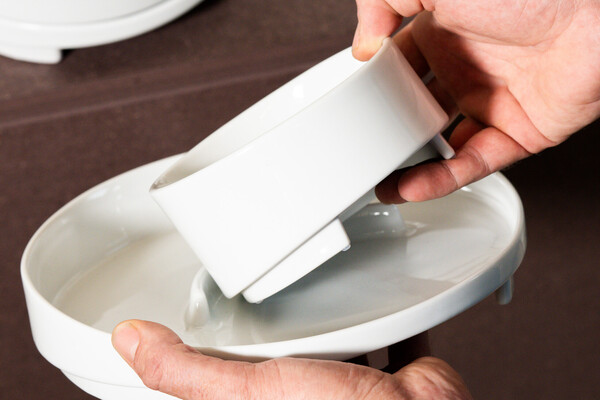
kwer - the universal plate set
Participatory further development of the prototypes and expansion of the product family
kwer is a crockery set that enables or simplifies independent eating for older people and people with disabilities. It was developed together with the users and combines aesthetic design with high functionality. As part of a BRIDGE proof of concept, the existing prototypes are being further developed at the SCDH in collaboration with the users and a possible expansion of the product family is being considered.
Needs-based room design | Alters- und Pflegezentrum Bruggwiesen
Development and implementation of ten half-day training programmes
The individual needs, habits and abilities of residents in a retirement and nursing home are central to the design of the premises. The SCDH has developed a training programme for the Alters- und Pflegezentrum Bruggwiesen. In the realistic test rooms in the Living Lab, the entire staff is sensitised and trained in needs-based room design.
CAS Sports facilities
Input and simulations workshop
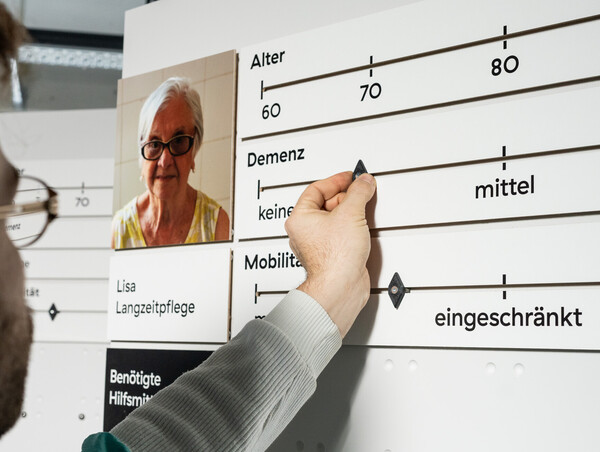
Sports facilities have to meet a wide range of different requirements, and the behaviour and needs of those using them are constantly changing. 1:1 simulation with the users can help to optimise the buildings.
Co-Care | Bern University of Applied Sciences
Coordination of care and assistance services for in-home dementia care
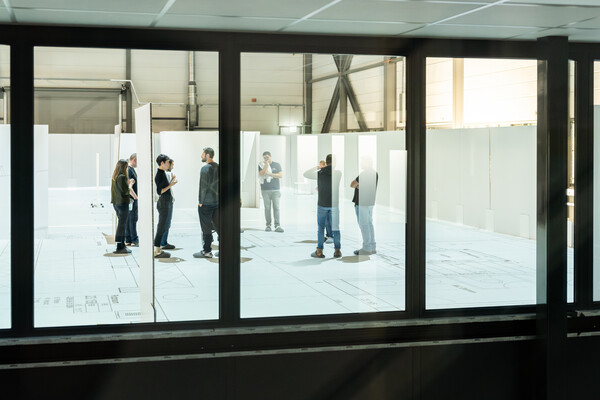
New care models are needed for the growing numbers of older persons living with dementia. To facilitate the provision of long-term care for people with dementia in their own homes, the interfaces between different providers of care and assistance services have to be identified and optimised. This is where this project comes in.
EVIDENT
Evidence-based architectural design of emergency departments for greater communication, collaboration and care delivery
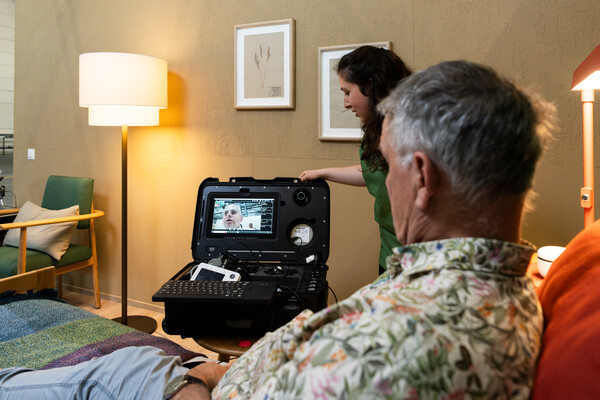
How does the spatial design of emergency rooms influence interactions between medical staff, and what measurable effects does the quality of communication have on job satisfaction, the frequency of burnout, staff turnover and patient care? Emergency rooms are central points of contact in hospital environments, and understanding these relationships is key to evidence based and people-oriented future designs.
New care home | Stiftung Dessaules
Development of an evidence-based colour and material concept
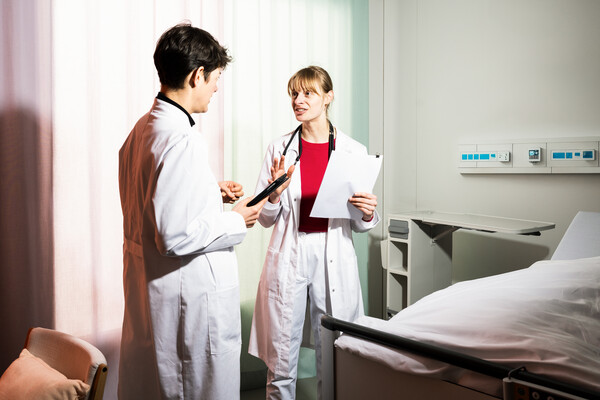
Stiftung Dessaules’ care homes combine the informal atmosphere of a residential community with the professionalism of a nursing home. The SCDH developed an evidence-based colour and material concept for a new care home to be built on Schwanengasse in Biel/Bienne. Design solutions appropriate both to the needs of residents and to the requirements associated with daily care routines were developed with the participation of staff.
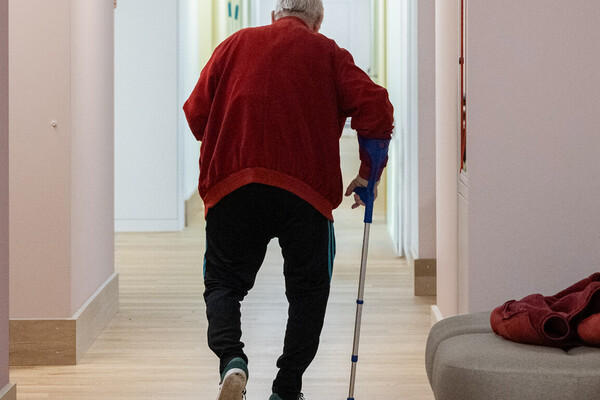
Living in asylum centres | IKEA Schweiz
Workshop on developing new design approaches
IKEA has three major focus areas for its commitment under its sustainability strategy: «Healthy & sustainable living», «Climate action & circularity» and «Fair & equal». IKEA Switzerland has chosen to focus on the housing situation of refugees and would like to contribute to its improvement.
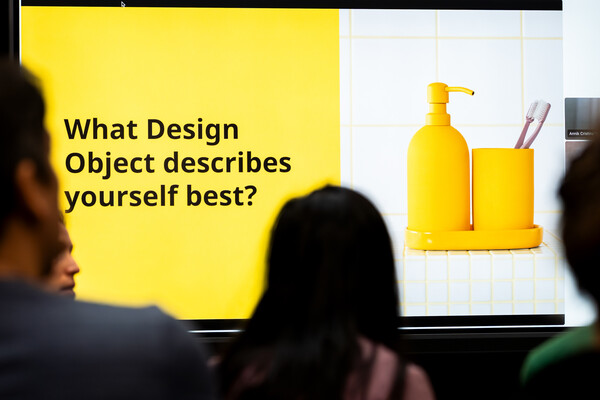
New operating theatre | Genolier Innovation Hub
Simulation-based evaluation using cardboard walls and mock-ups in a shell building
The Genolier Innovation Hub is planning to build a 450 m2 «operations block». The space is slated to serve as a hub for research, development, education and training, as well as a venue for events. The primary focus, though, will be on its use as a training environment for surgeons and specialist medical personnel – as a space for practitioners to learn new techniques and test medical products.
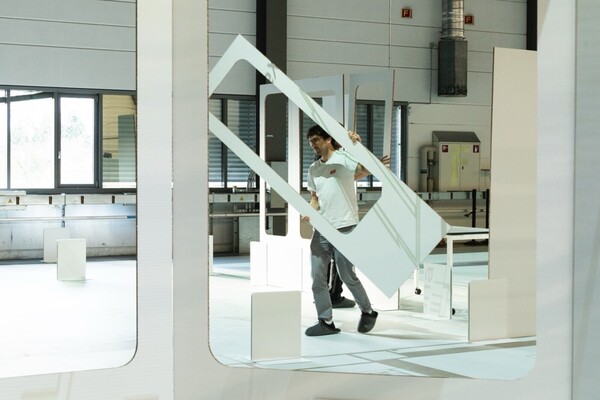
Accessible Tour of Switzerland
Participatory and iterative development of an inclusive booking process
The aim is to optimally tailor the procedure for booking the «Accessible Tour of Switzerland» to the needs of customers with disabilities. To this end, the non-profit Claire & George Stiftung and the SCDH are collaborating to develop aspects of the user experience on the website through a participative and research-based approach as part of a project of the Swiss Innovation Agency «innovation cheque» grant programme.
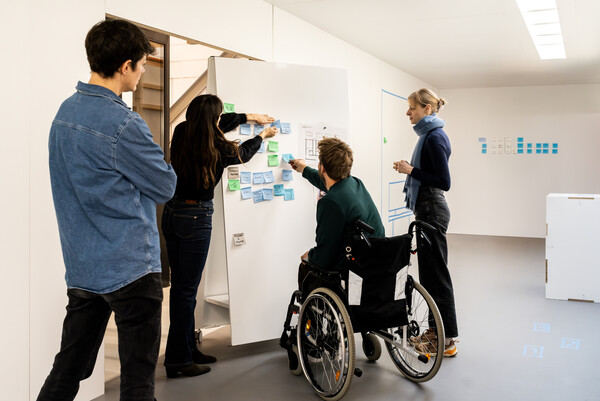
New Hospital Building in Biel-Brügg| Spitalzentrum Biel
Simulation-based evaluation of the floor plan during the planning phase
With the help of projections, lightweight construction walls, context-specific furniture and mock-ups, teams from the hospital Spitalzentrum Biel, the fsp Architekten AG, the Steiger Concept AG and experts from the SCDH evaluate the floor plans for the planned new building in SCDH’s Extended-Reality Simulation Area. The objective: to identify architectural and construction challenges with regard to patient safety or the smooth workflow and delivery of care, and to avoid construction errors.
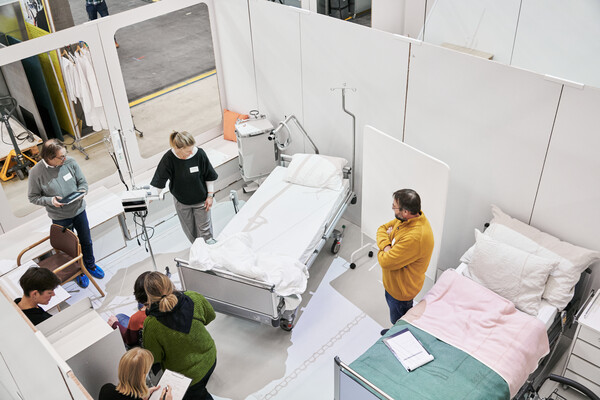
CAS Rebuild Ukraine | Bern University of Applied Sciences
Simulation-based evaluation of the floor plan of the Maternity Hospital in Dnipro
In the certificate of advanced studies (CAS) course «Rebuild Ukraine», refugees from Ukraine learn how they can make an enduring contribution to rebuilding their country. The SCDH supports the CAS course with a simulation and evaluation of the floor plans for the maternity hospital in Dnipro.
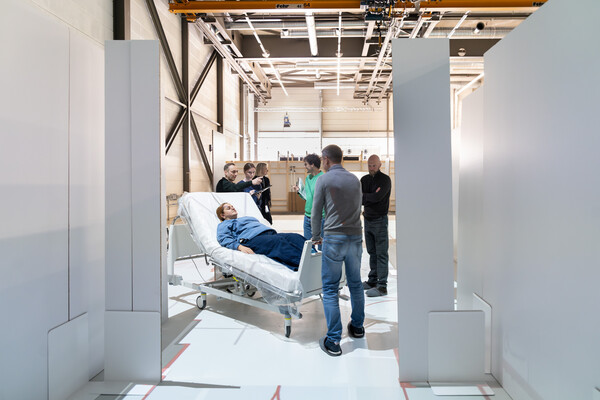
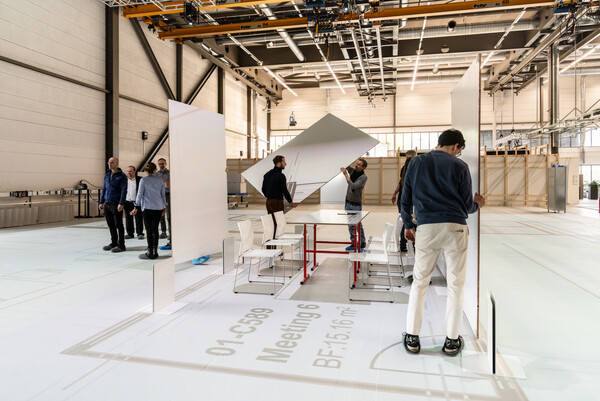
CAS Digital planning, building and use
Testing the floor plans of the new Biel/Bienne campus on the Extended-Reality Simulation Area
Visit to the SCDH by students of the advance studies course (CAS) «Digital planning, building and use» of the Bern University of Applied Sciences. Testing of the floor plans of the new Biel/Bienne campus in the Living Lab – physically testing, though, not digitally, and on a 1:1 scale in our Extended-Reality Simulation Area.
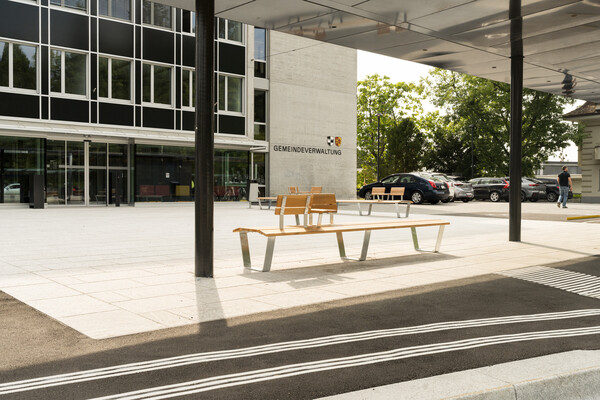
Age-appropriate seating for Muri-Gümligen | komform GmbH
Development and production of mock-ups and prototypes, manufacture of 18 benches
The Commune of Muri-Gümligen near Bern would like to make their public spaces more attractive to older members of the population. Among the elements people would like to see are age-friendly walking circuits and seating options. The SCDH developed a prototype of an age-sensitive seating option, based on designs by komform GmbH; it will be one of the options in a vote by the local population.
Service Design for Care@home | Bern University of Applied Sciences
Visual analysis of planned services offered by independent Care@home initiatives
There are numerous Care@home initiatives running independently of each other in Switzerland. Their aim is to facilitate cost-efficient care at home and reduce the load on the hospital infrastructure for the long term. The interactions between the various service components being planned are highlighted in a visual situation analysis for stakeholders. The project lays the groundwork for a subsequent project – the development of a learning platform.
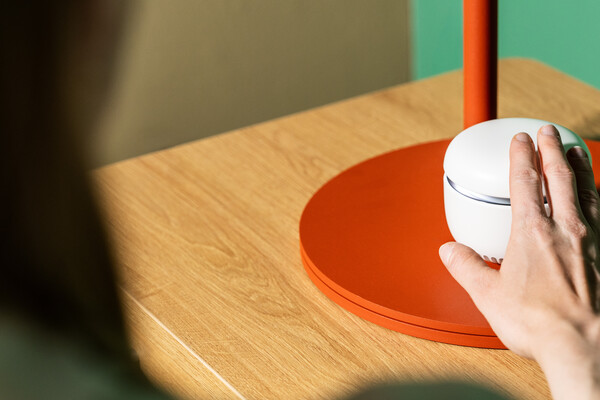
Health-promoting architecture | Rehaklinik Hasliberg
Visit to a best-practice example and introduction to the topic for the Rehaklinik Hasliberg
One-day event at the SCDH for the people involved in the construction process at the rehab clinic in preparation for the refurbishment and new construction work to be undertaken at Rehaklinik Hasliberg. The group visits an example of best practice and receives an introduction to the subject of health-promoting architecture.
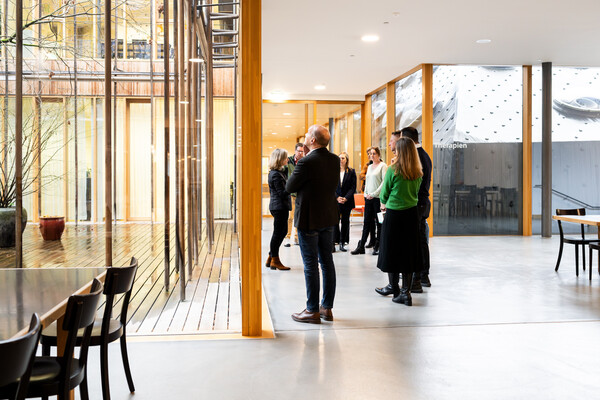
New construction of outpatient clinic | Spital Bülach
Simulation-based evaluation of the floor plan during the planning phase
Joint evaluation of the floor plan for the new outpatient clinic in the Extended-Reality Simulation Area, with the use of projections, lightweight construction walls and context-specific furnishings and mock-ups, by the team from Bülach Hospital (Spital Bülach), the architect responsible and the SCDH’s experts. The objective: to identify architectural and construction challenges for patient safety and for the smooth flow of work and care services and to avoid construction errors.

Improving the user-friendliness of onkologika.ch | Onkologiepflege Schweiz
Analysis and recommendations for optimising the website
What does a user-friendly website look like? With this question in mind, experts from the SCDH, the Academic Society of Oncology Nursing (Akademische Fachgesellschaft Onkologiepflege), Eastern Switzerland University of Applied Sciences, the Insel Gruppe network of hospitals and the Cantonal Hospital of St. Gallen evaluate the website of the Swiss professional association for oncology nursing, Onkologiepflege Schweiz. In line with the SCDH’s participative approach, users from a variety of care settings and regions of Switzerland are involved in the evaluation.
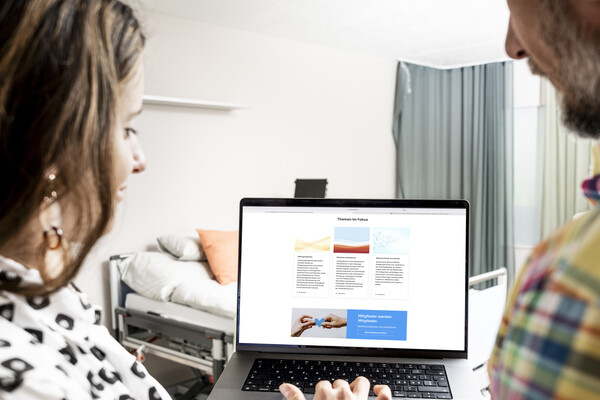
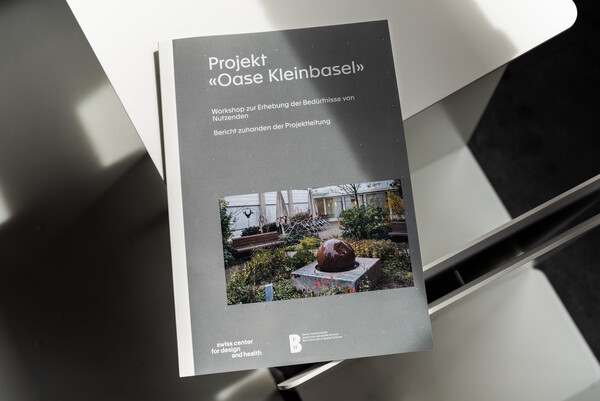
oase.kleinbasel: an intergenerational centre for palliative care and support | dandelion Pflegezentrum für Menschen mit Demenz
Workshop to identify user needs
Part children’s hospice part care facility part residence – envisaged is a multigenerational centre in which people of all ages and with a variety of support needs can receive temporary or long-term professional care and support. Experts from the SCDH and the Bern University of Applied Sciences gather information about the needs of future centre’s users and submit a report to the centre to serve as the basis for the competition brief.
Seating and presentation furniture for «NEXPO – The new Expo» | Gerhard Gerber Design
Development of a prototype
The mayors and representatives of Switzerland’s ten largest cities put forth a concept for the next national exhibit, calling for the «NEXPO – The new Expo» to explore new approaches: it should be sustainable, future-oriented and, above all, decentralised. The SCDH was charged developing the prototype of seating and presentation furniture piece for the concept’s launch.
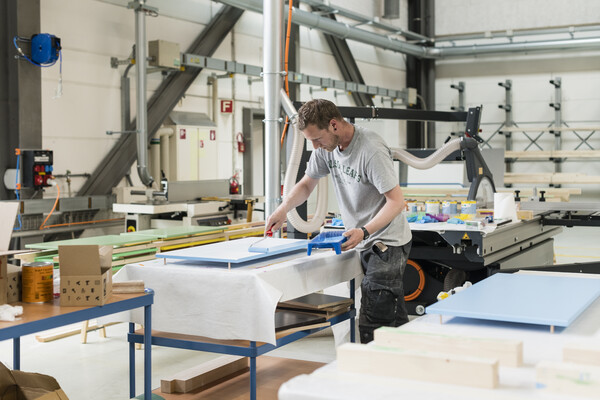
Surgery unit | Spital Bülach
Simulation-based evaluation of the floor plan during the planning phase
Joint evaluation of the floor plan for the surgery unit in the Extended-Reality Simulation Area, with the use of projections, lightweight construction walls and context-specific furnishings and mock-ups, by the team from Bülach Hospital (Spital Bülach), the architect responsible and the SCDH’s experts. The objective: to identify architectural and construction challenges for patient safety and for the smooth flow of work and care services and to avoid construction errors.
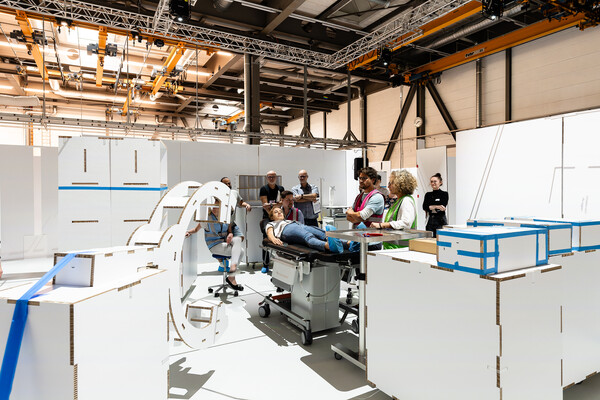
New outpatient clinic MEDIN Biel/Bienne
Simulation workshop
Joint evaluation of the floor plans of the new outpatient clinic by the team from MEDIN Biel/Bienne and the SCDH’s experts using the Extended-Reality Simulation Area. The objective: identify architectural and structural challenges relating to patient safety or to smooth workflow and care processes and prevent construction errors.
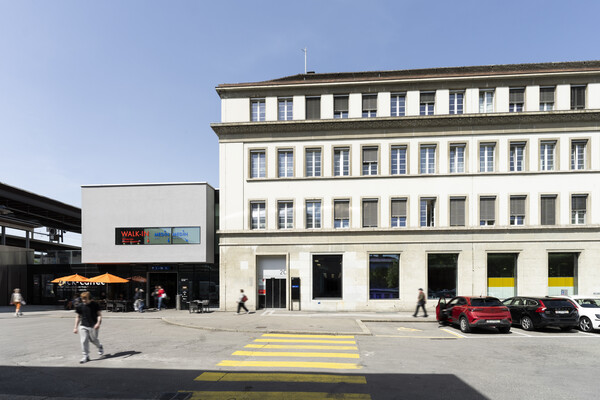
WISE: web-based patient interview tool for interdisciplinary symptom evaluation | University of Zurich / Center for Dental Medicine
Analysis and recommendations for further development
WISE is a web-based patient interview tool used by the interdisciplinary pain unit at the University of Zurich’s Center for Dental Medicine to record and evaluate orofacial pain. The unit wants to increase user-friendliness in the next iteration of the tool.
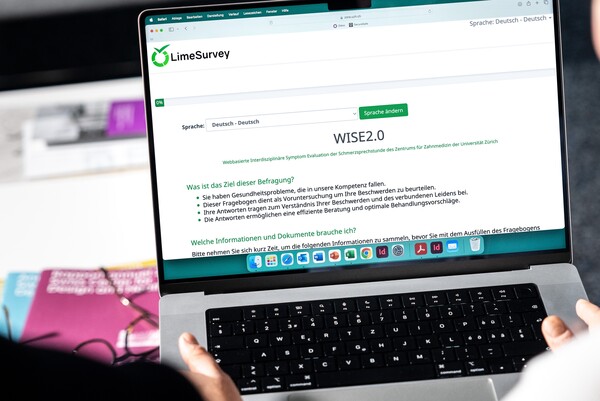
Architecture of emergency wards | ETH Zürich
Presentation of research results
Presentation of the results of ETH Zurich research concerning the architecture of emergency wards using the Extended-Reality Simulation Area in the Living Lab and their evaluation by participants and students using defined scenarios.
New campus in Biel/Bienne | Bern University of Applied Sciences
Presentation and simulation based evaluation of the plans
Evaluation of the new spaces at the Bern University of Applied Sciences (BHF) using the Extended-Reality Simulation Area. Display of planning materials, models and presentations in the Living Lab.