
New Dock A I Zurich Airport
Simulation workshop on the quality of the visitor experience, operational and passenger processes in the new Dock A
Zurich Airport will commence construction of the new Dock A in 2030. Key aspects of the newly designed airport area are sustainable construction and a high quality of stay. A simulation workshop at the SCDH will test the construction plans on a 1:1 scale and provide important insights into the boarding and disembarking processes for passengers at the gate.
Term
- April – June 2026
Client
- Zurich Airport
Translated with DeepL.
Context
Zurich Airport’s infrastructure is undergoing a phased modernisation process. Dock A, along with the control tower built at the same time, has been in daily operation for more than 35 years and is used by around a third of departing and arriving passengers.
As its structure has remained largely unchanged since it first came into operation in 1985, it can no longer meet the requirements for functionality, sustainability and quality in its current form. Zurich Airport AG has decided to replace the existing Dock A with a new building.
With its state-of-the-art infrastructure, the future Dock A is intended not only to significantly improve the quality of the passenger experience, but also to enable optimised operational and passenger processes and to offer staff improved working conditions.
The Swiss Centre for Design and Health (SCDH) is supporting the planning process with its expertise in simulation-based design testing.
Approach
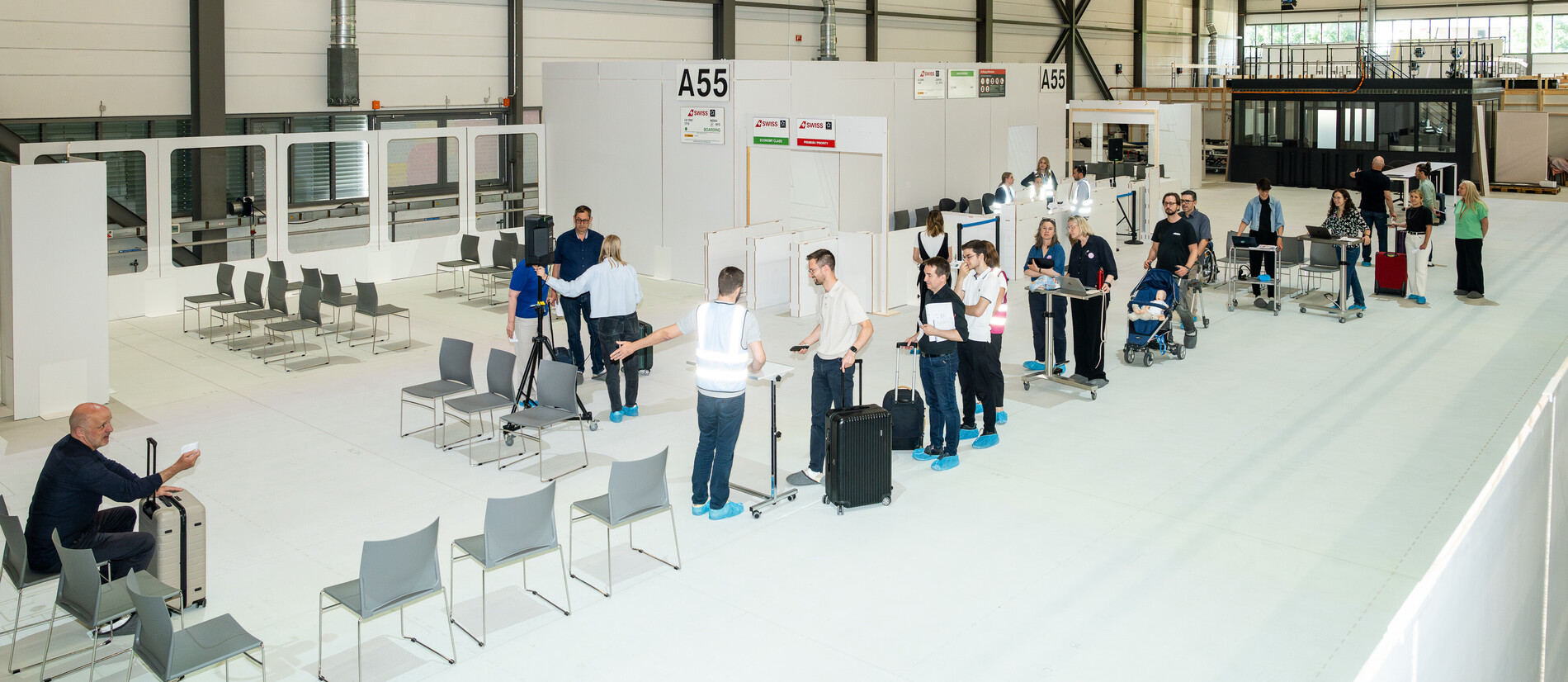
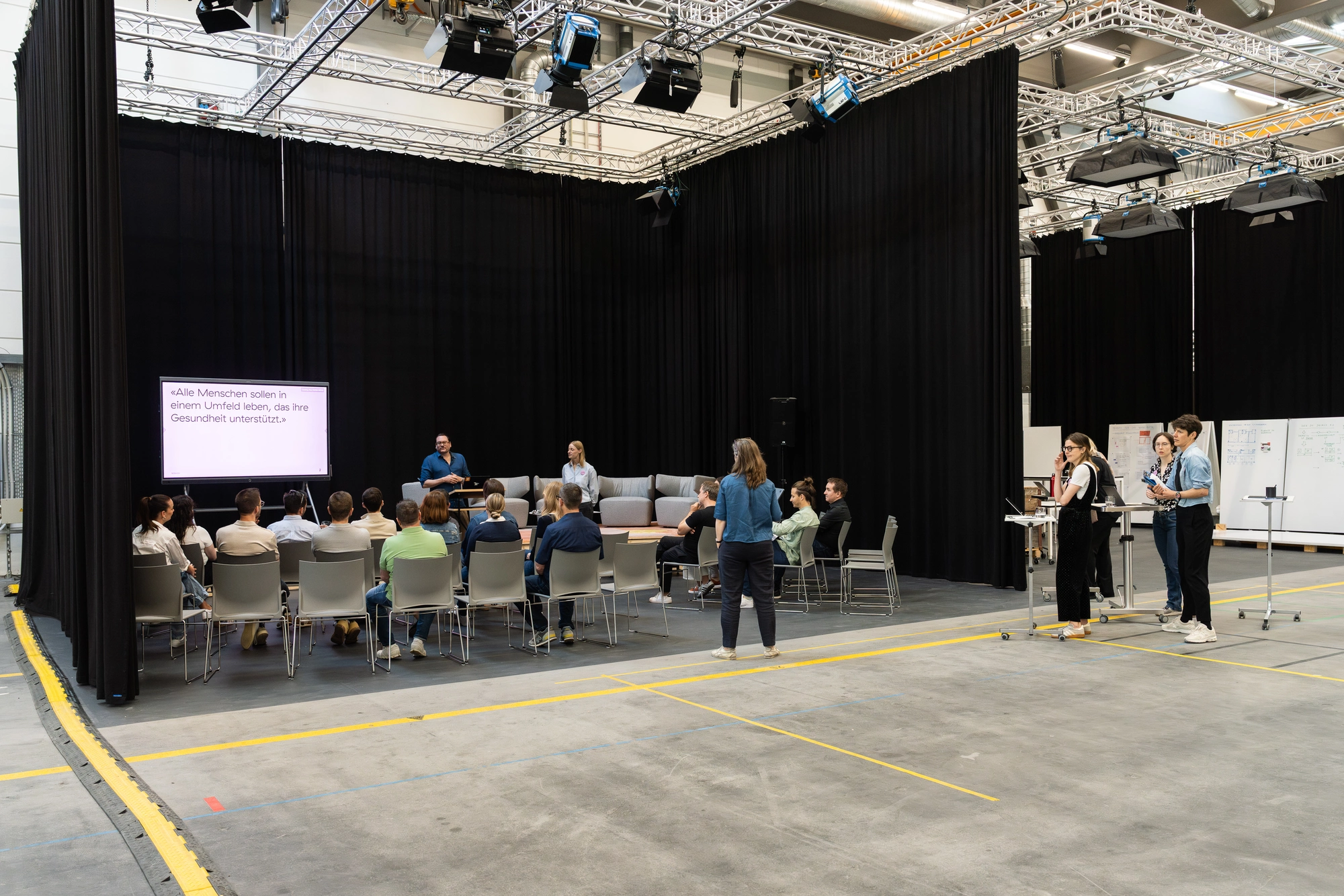
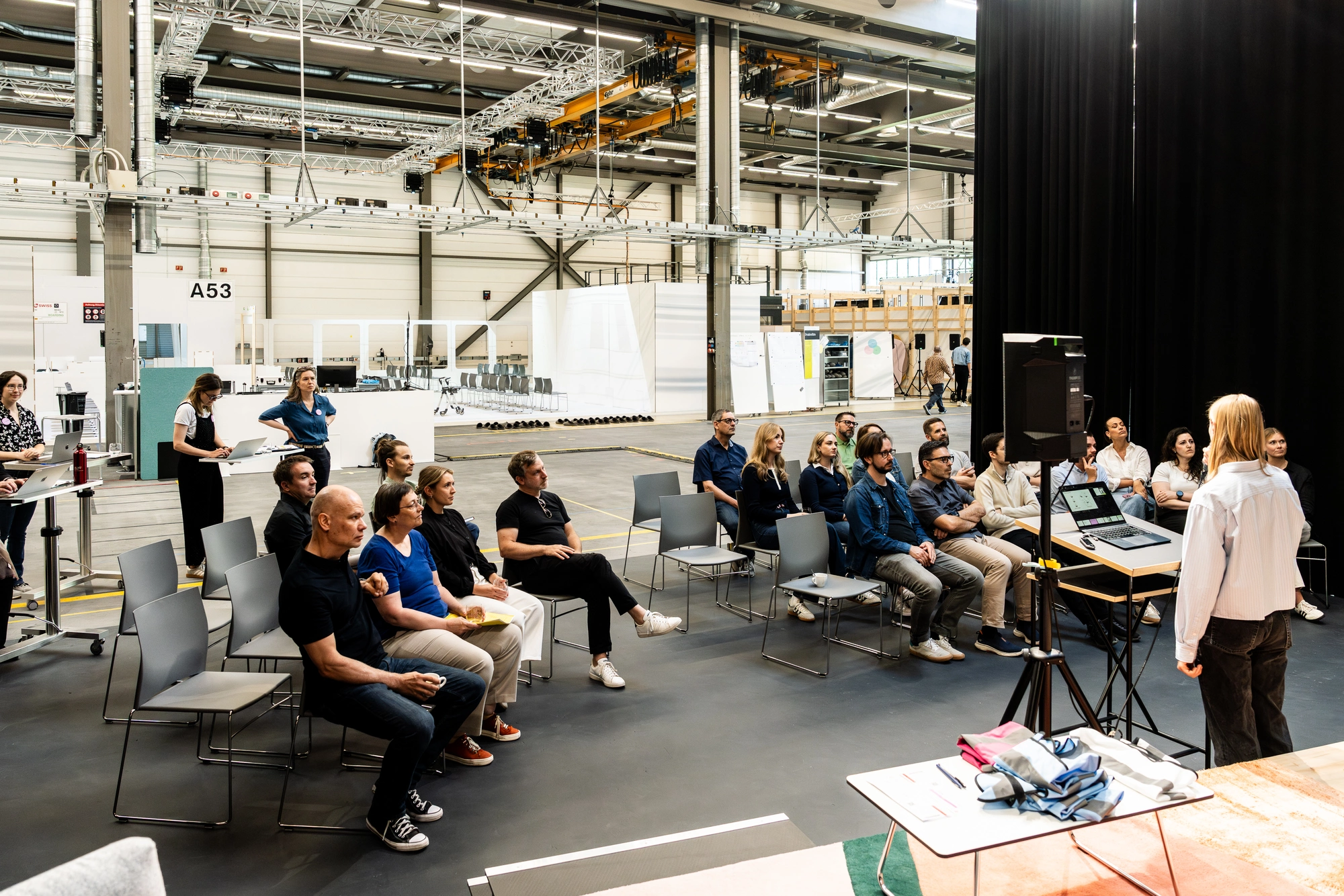
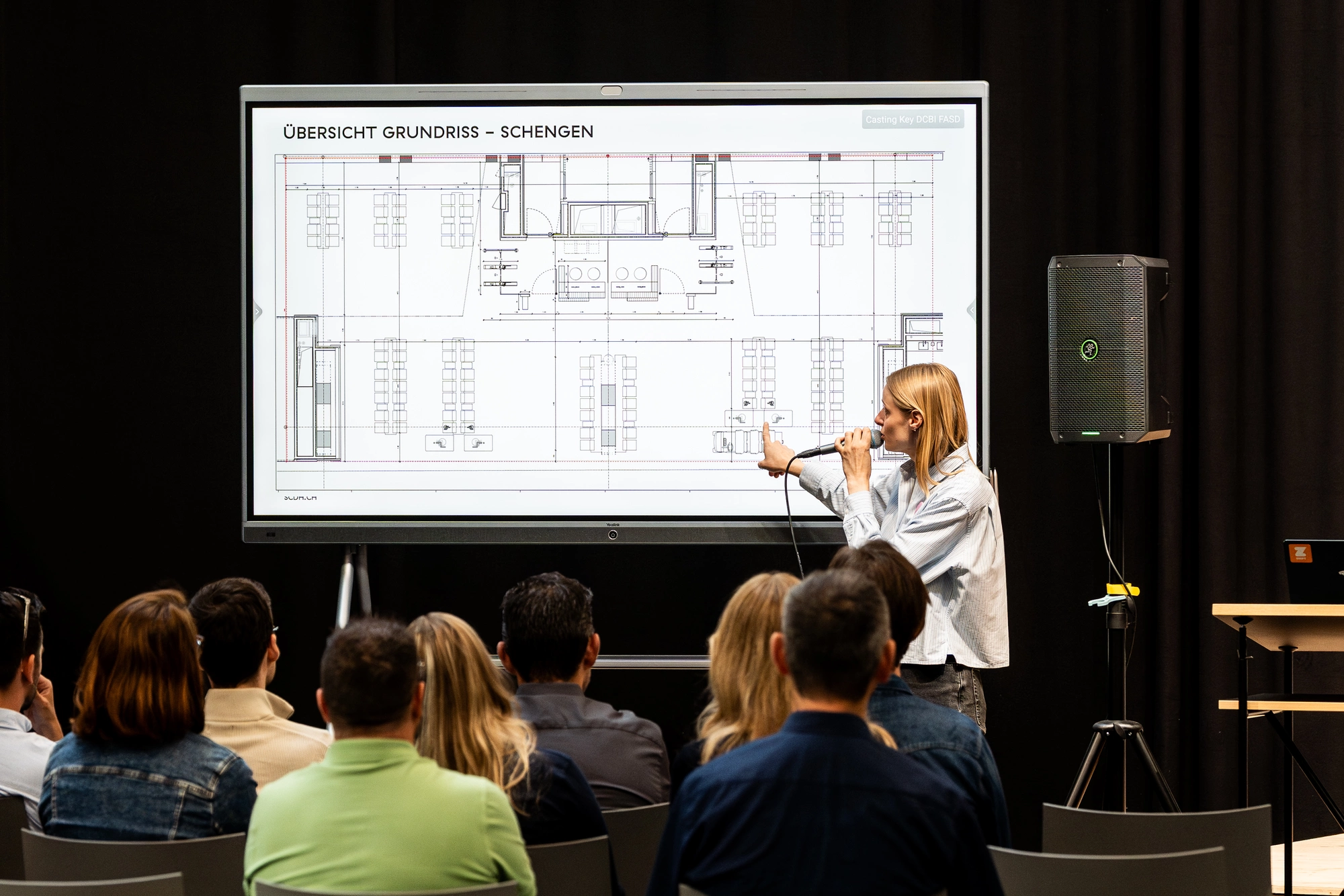
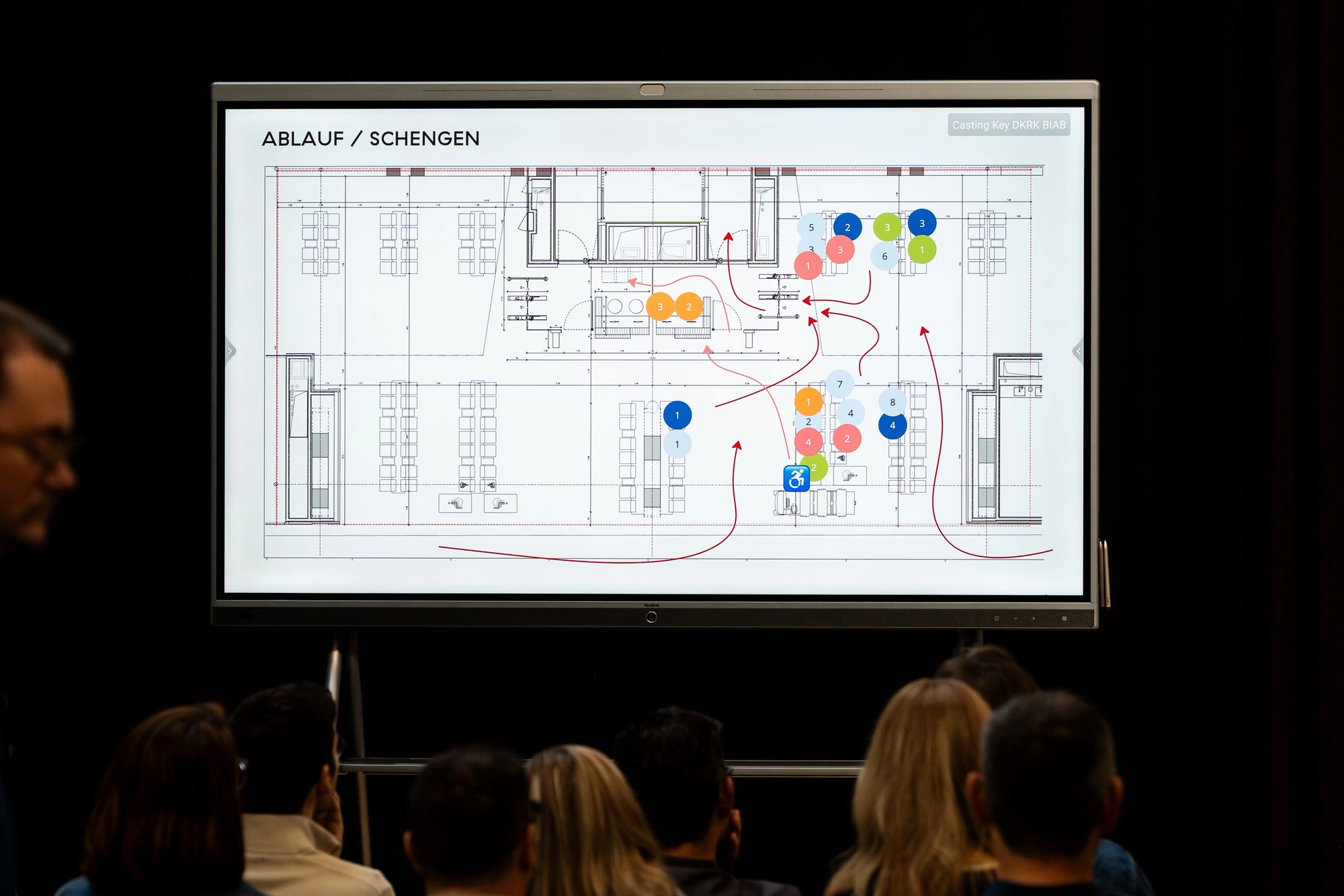
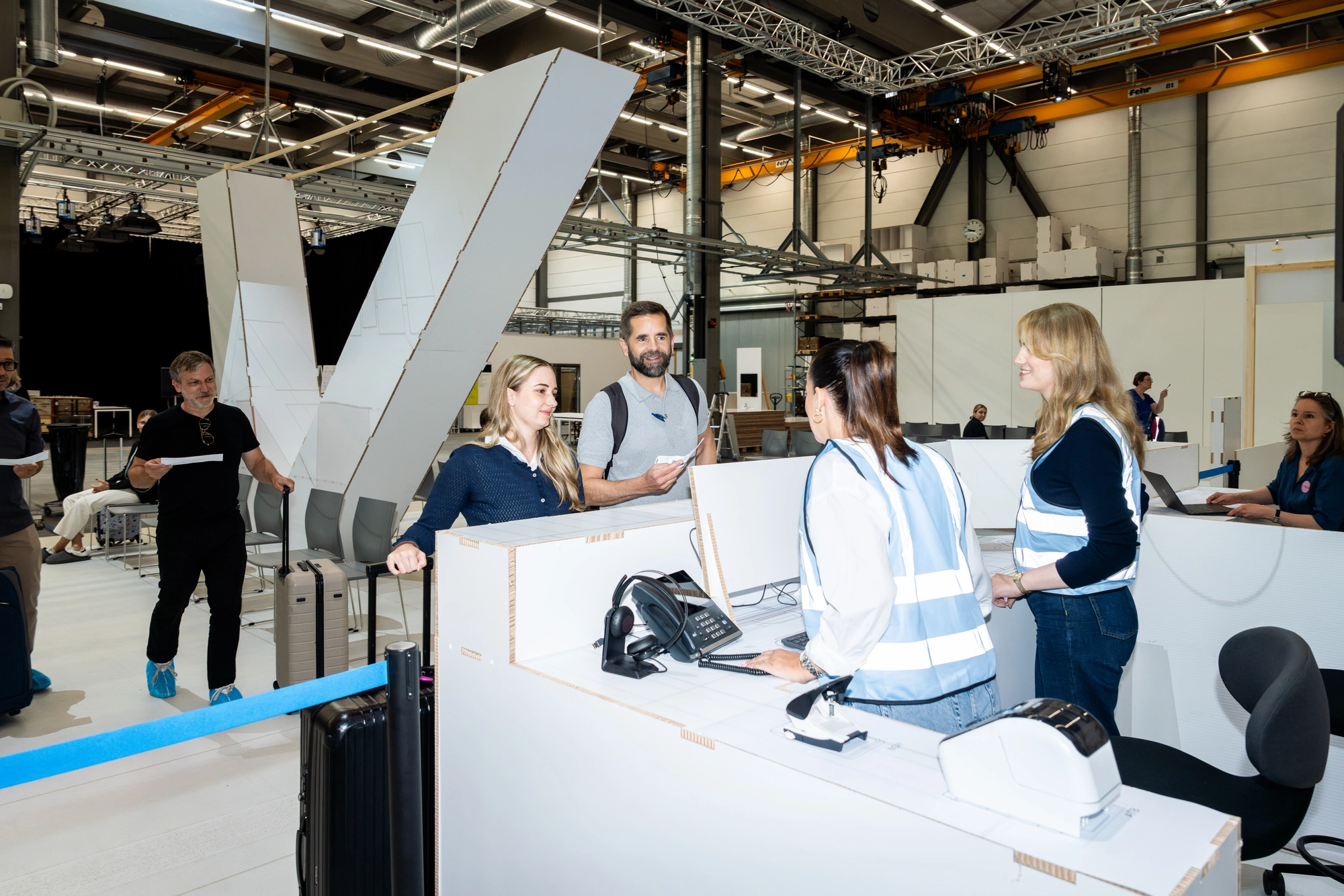
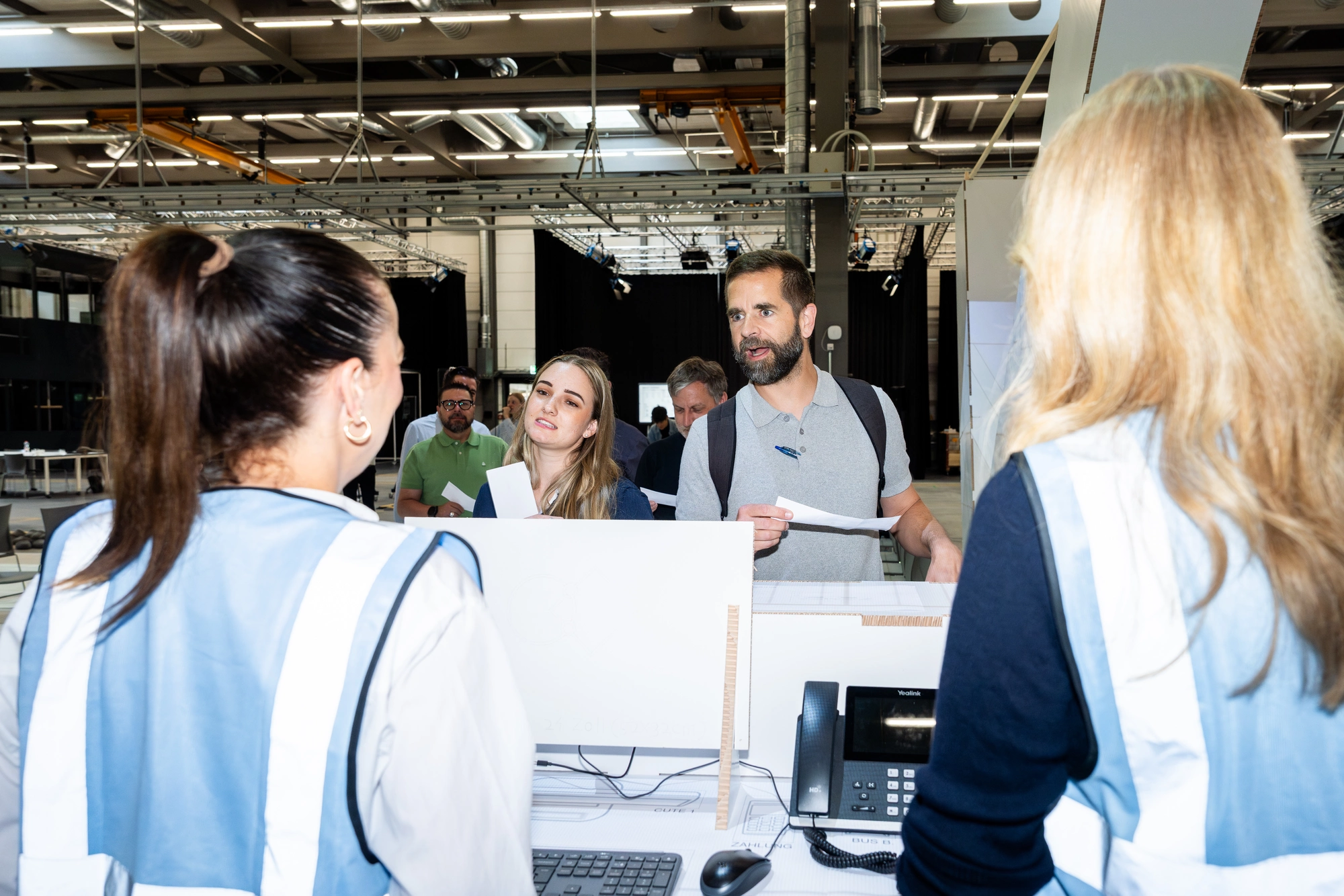
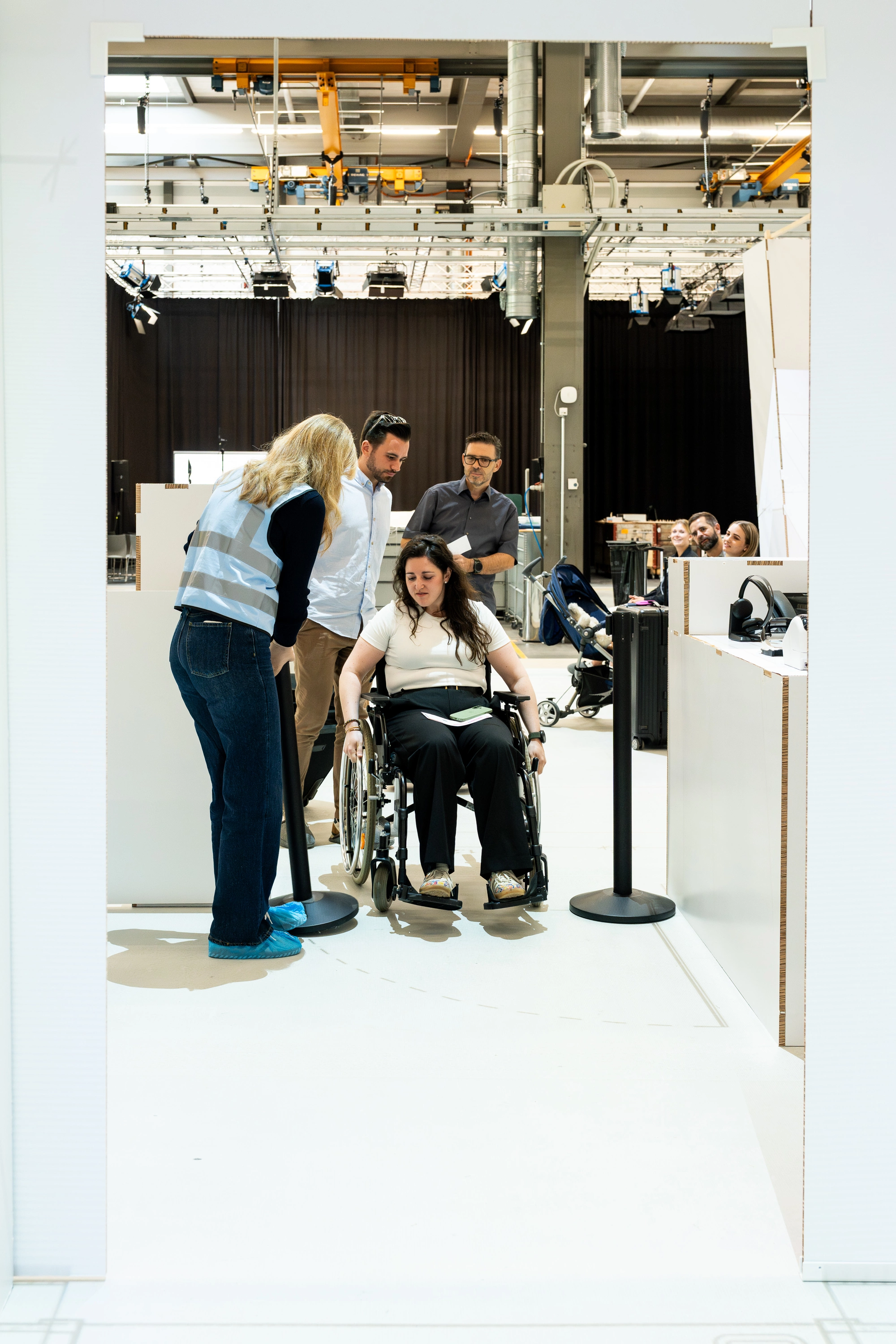
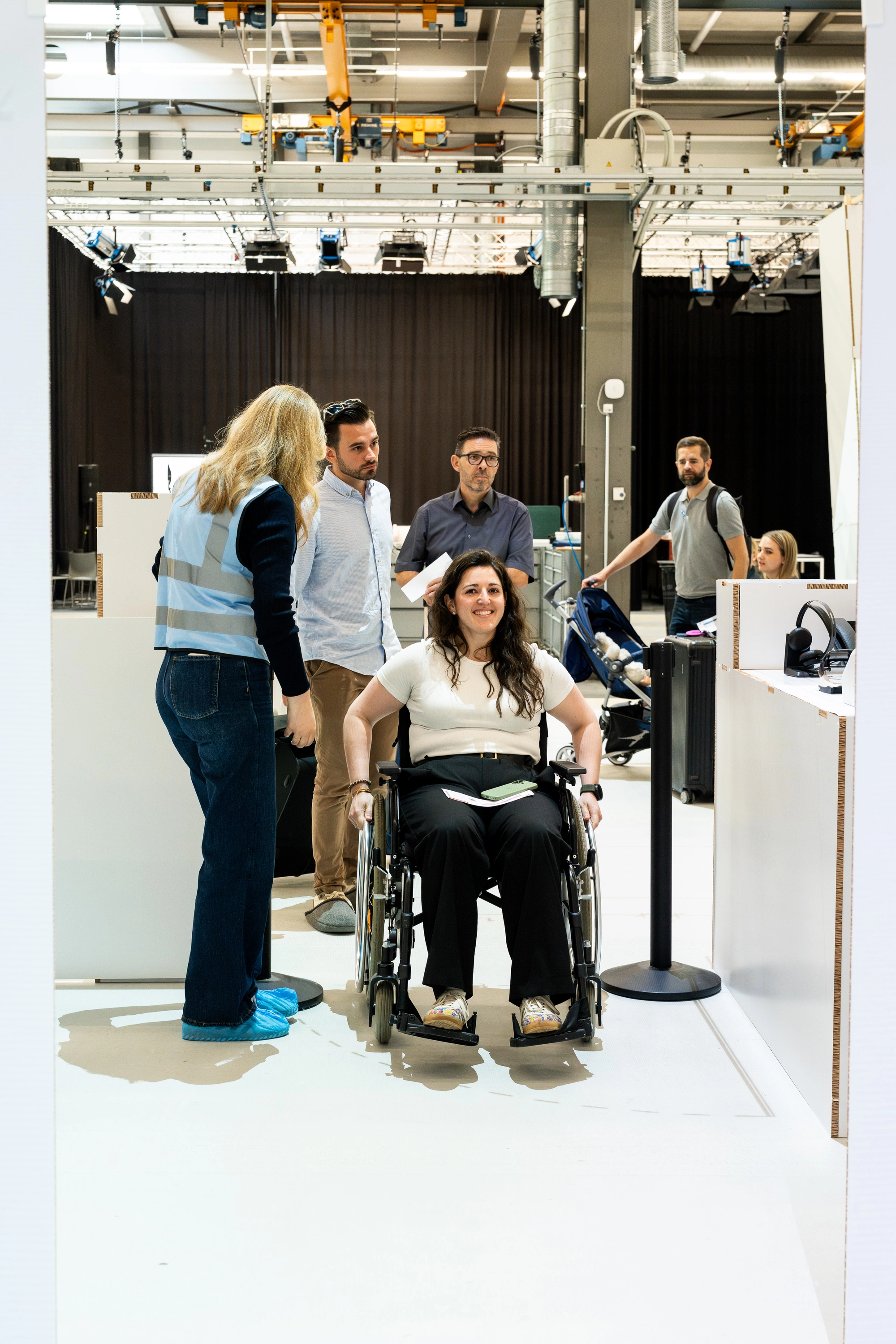
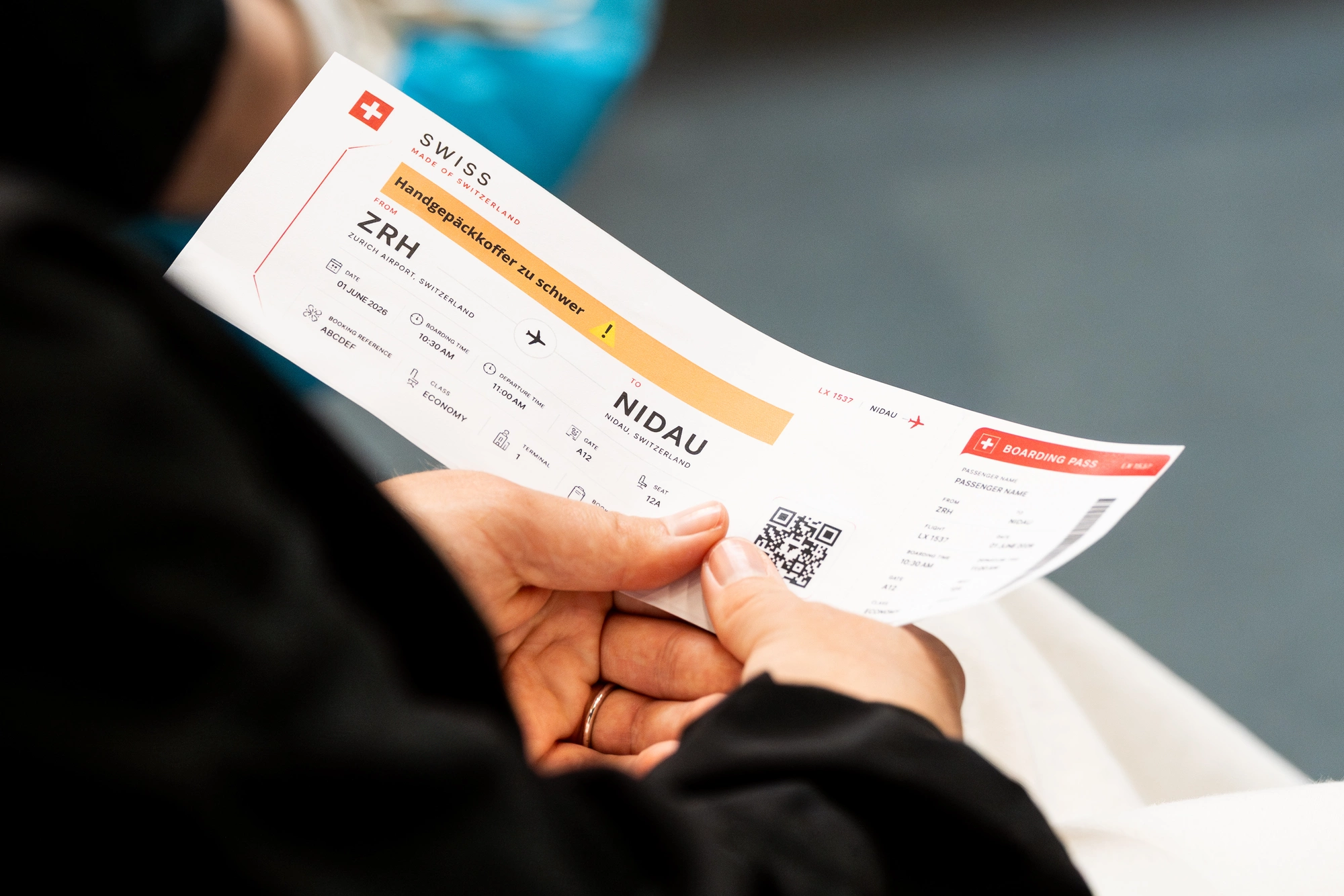
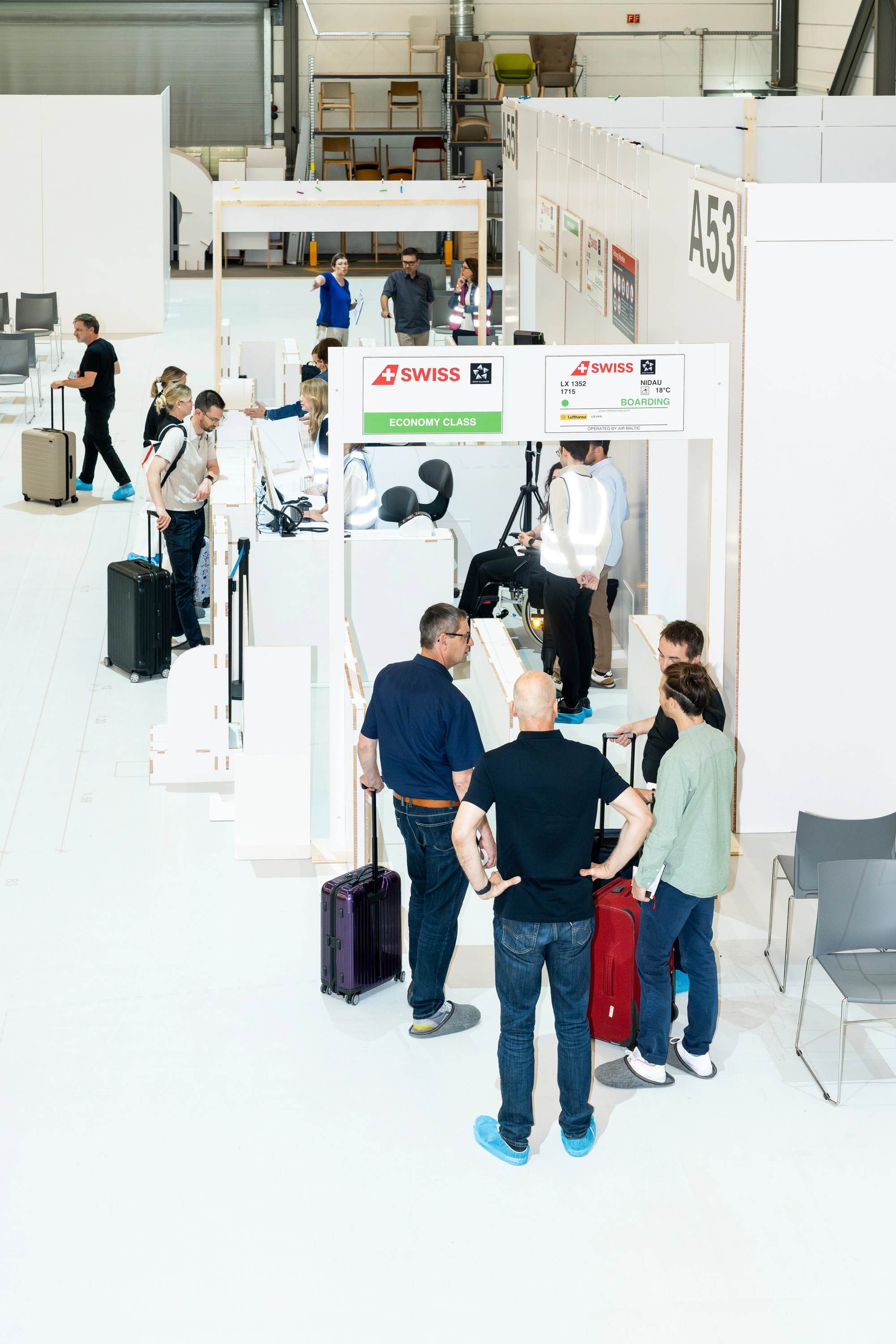
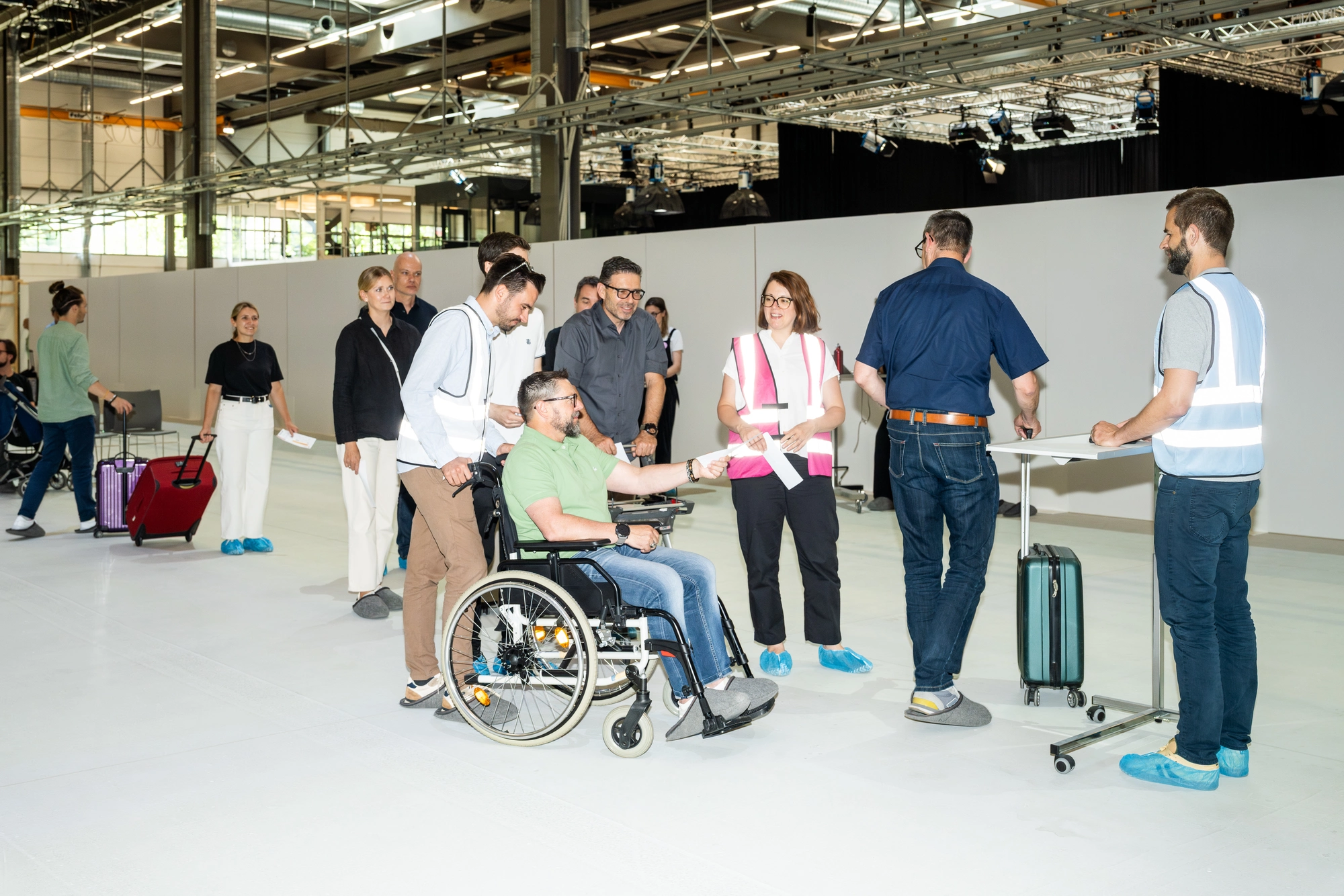
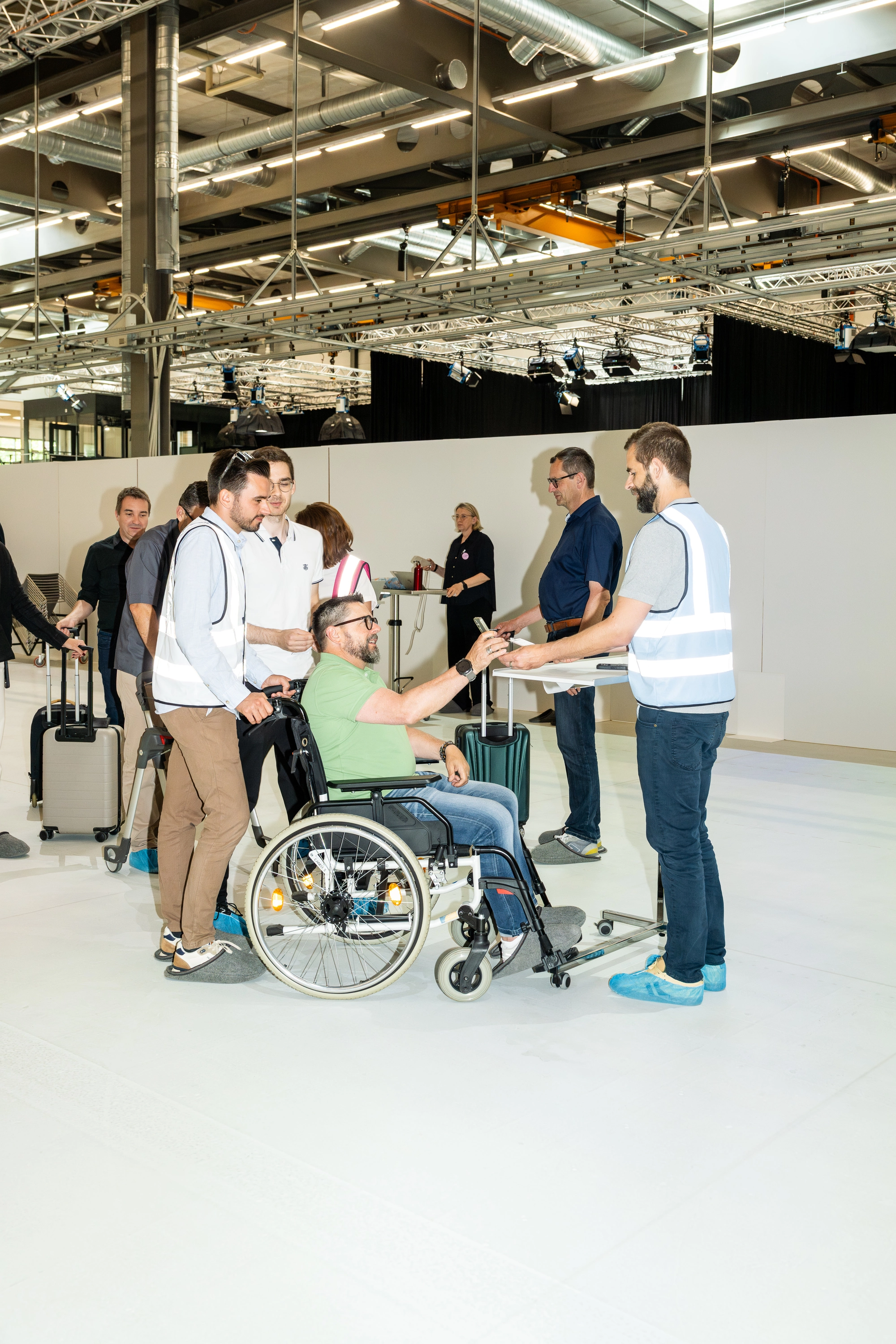
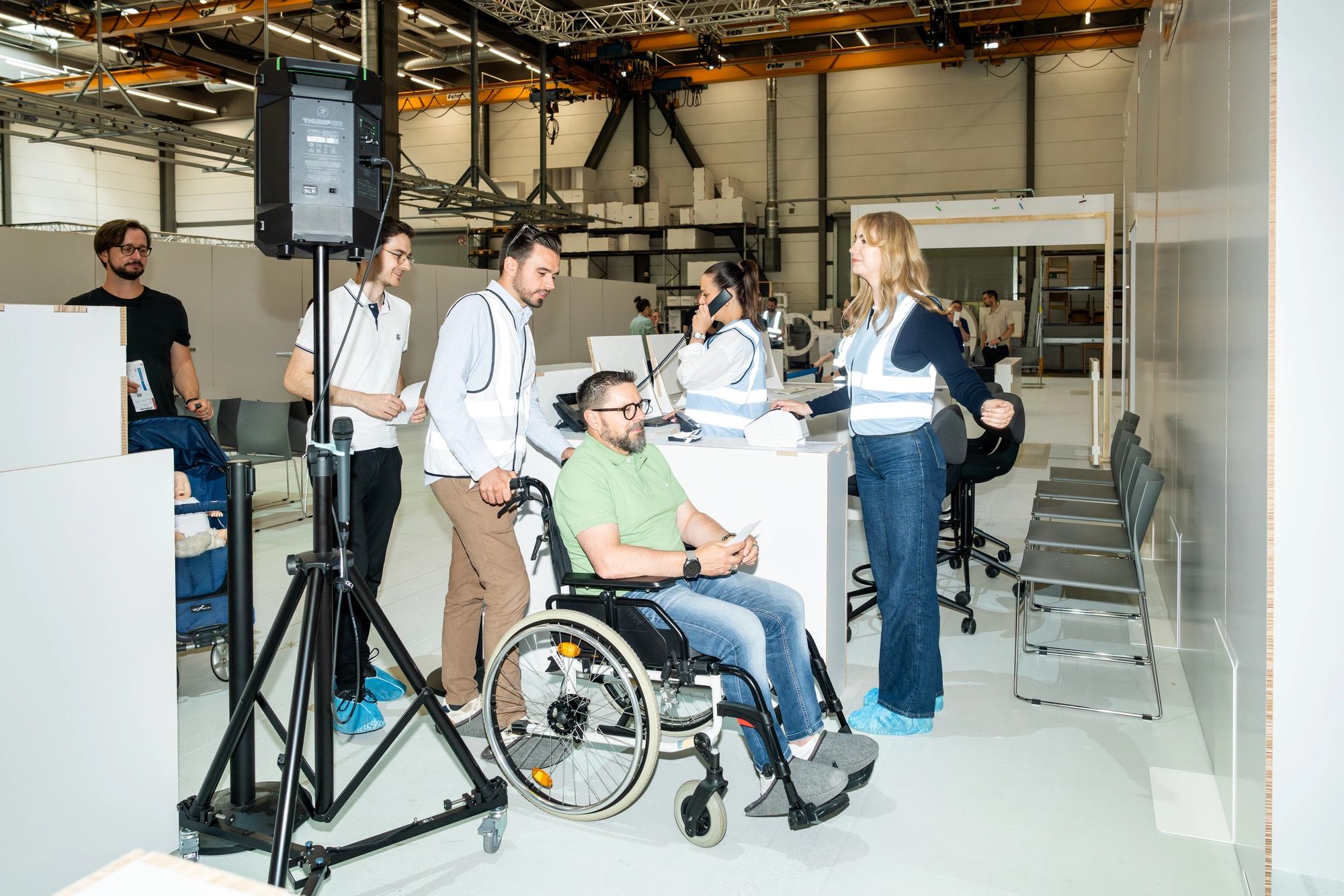
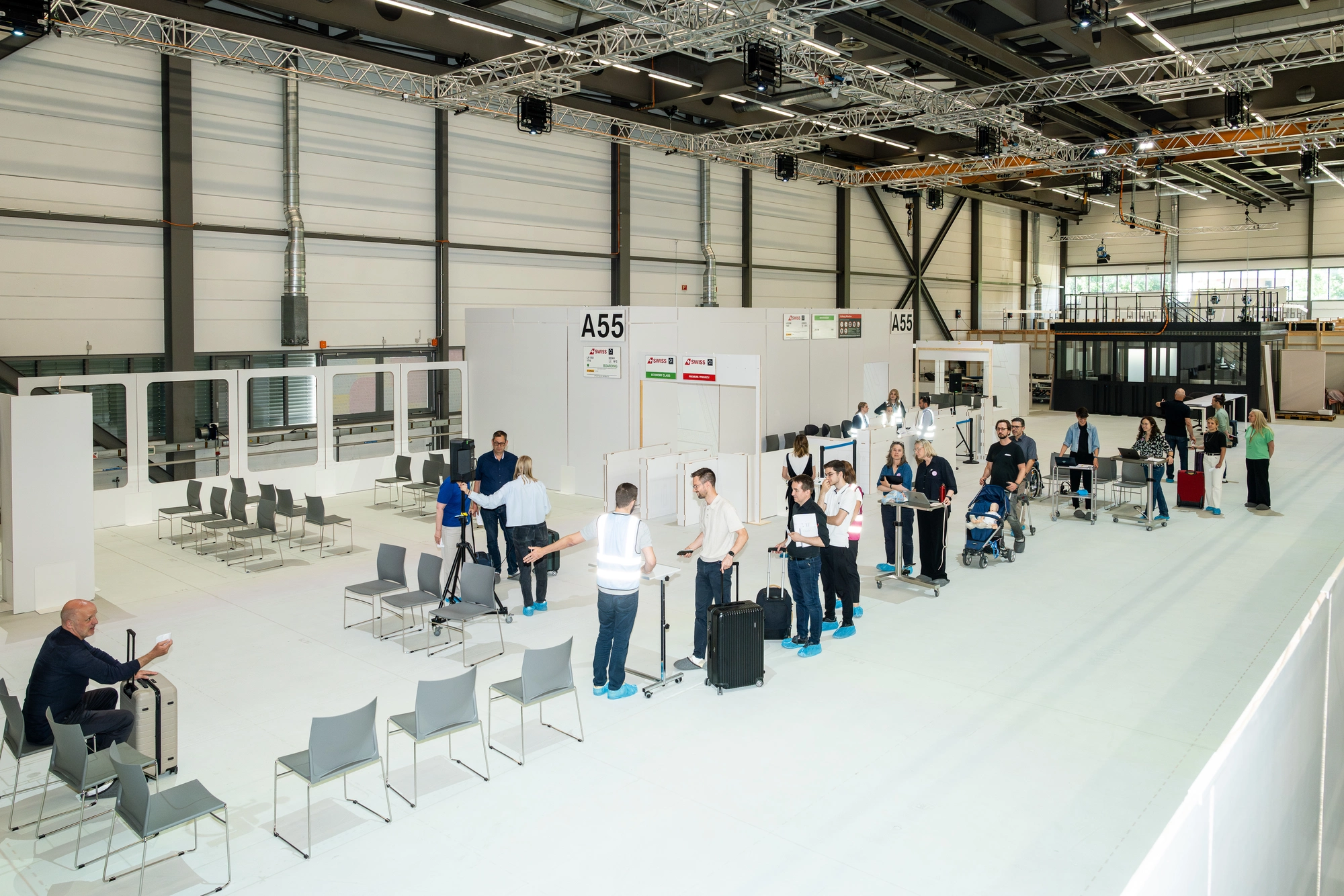
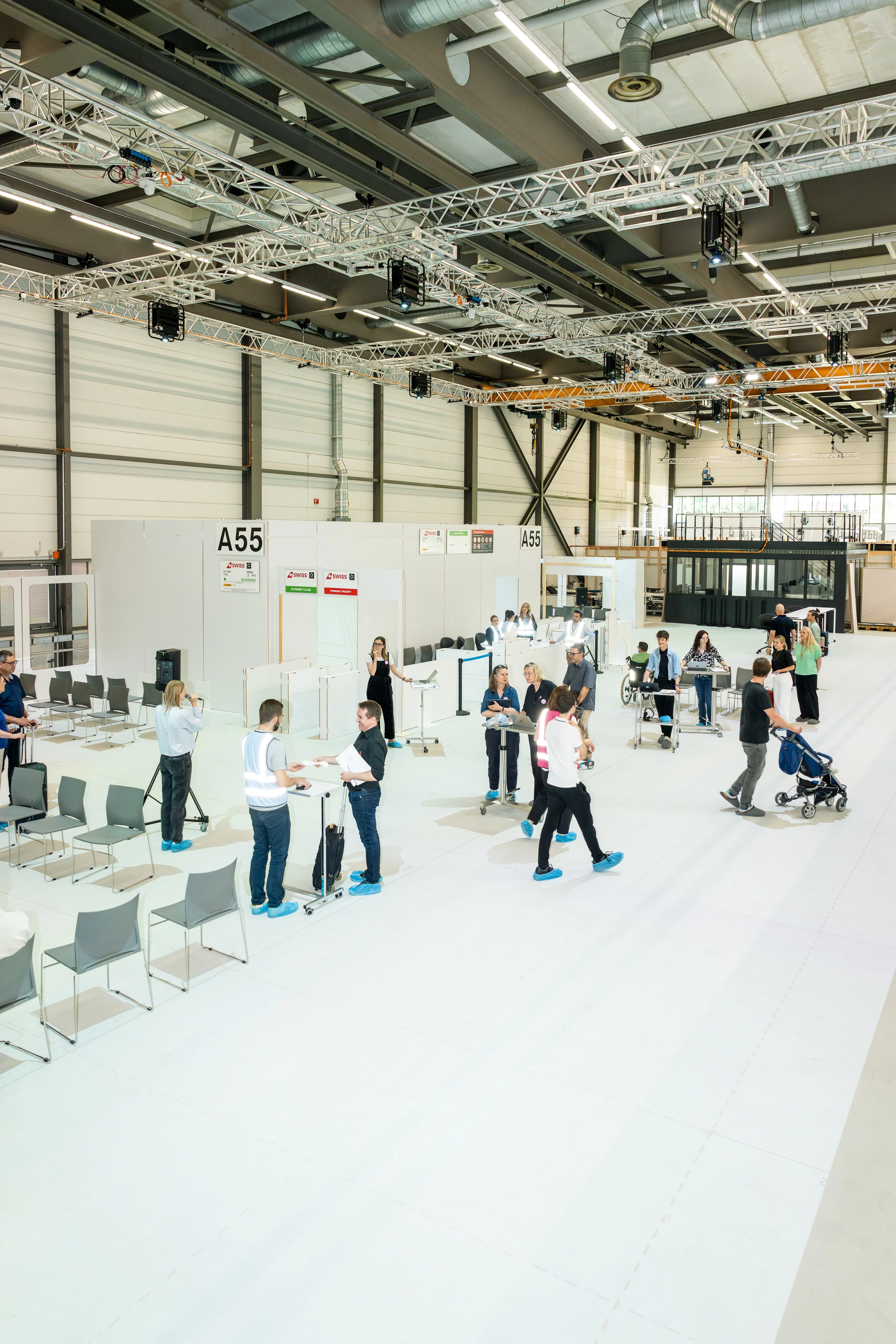
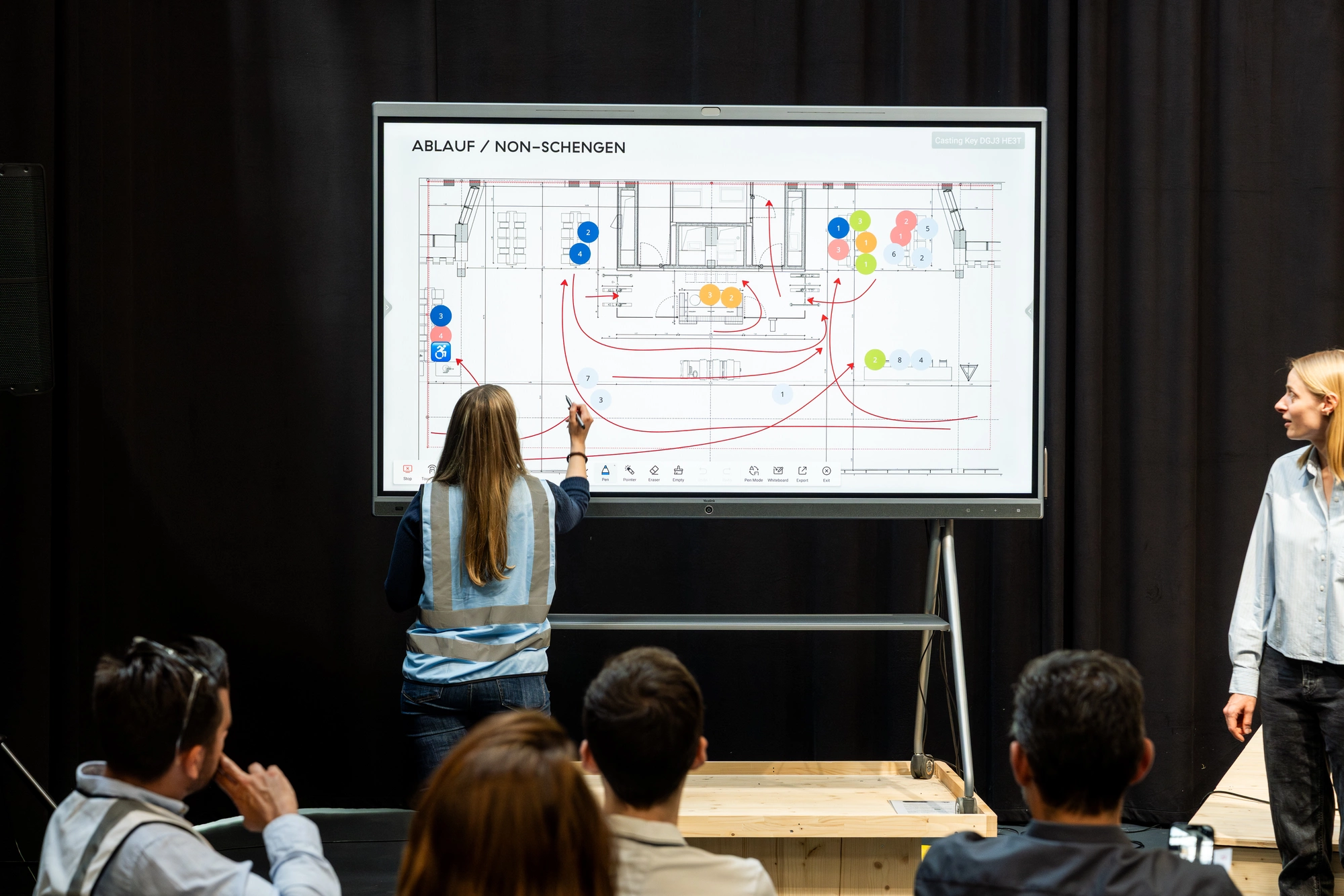
Is the signage visible from the various boarding areas? Is there sufficient space for wheelchair users, even during periods of high passenger volume? Is there enough space at the check-in counters to ensure the efficient processing of all passenger groups? And what is the ideal position for document checks on departures to non-Schengen countries? To find answers to these and other questions, the SCDH designs and conducts a full-day simulation workshop at the simulation facility in Nidau. This is based on the current state of planning and the key areas and processes defined in consultation with stakeholders.
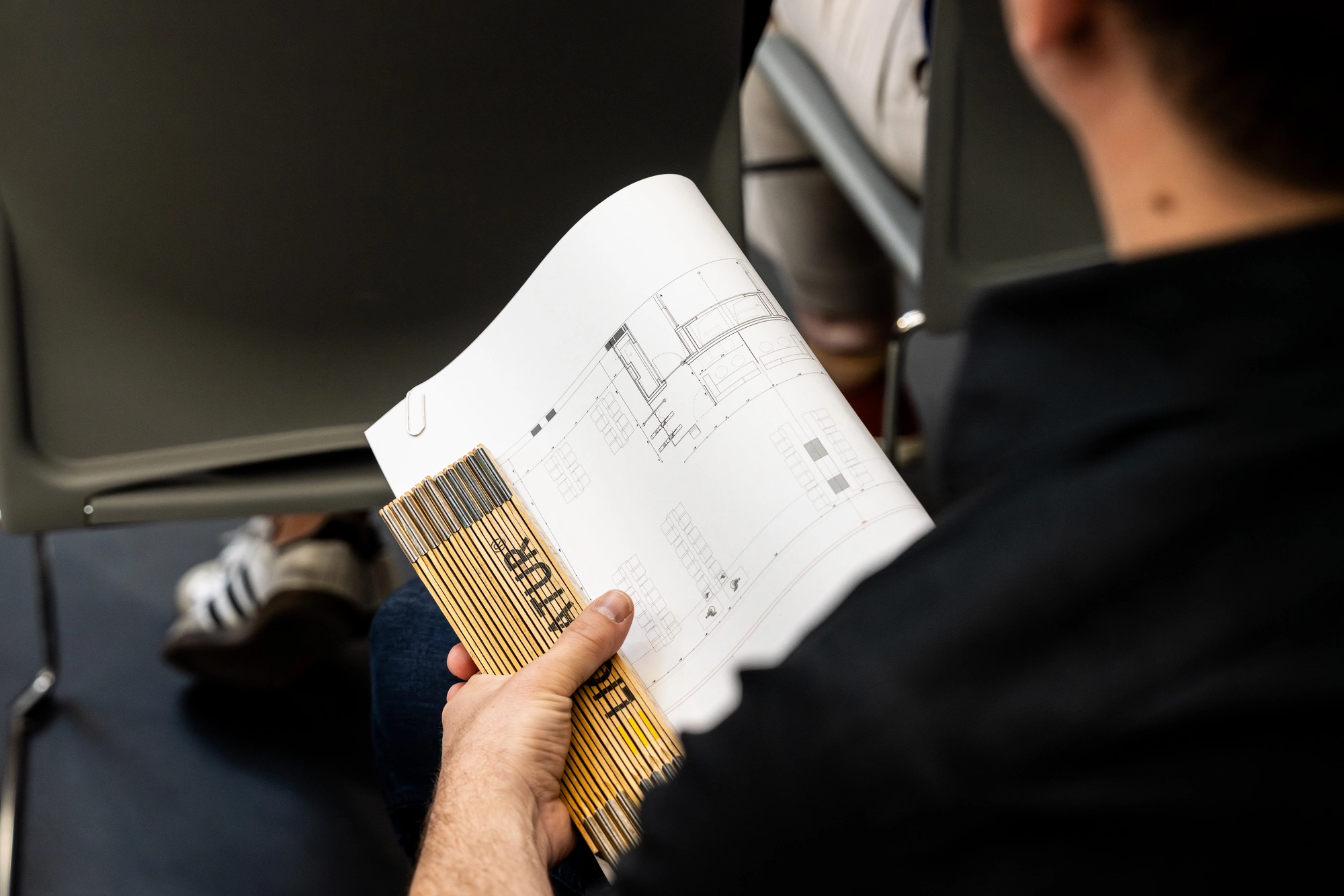
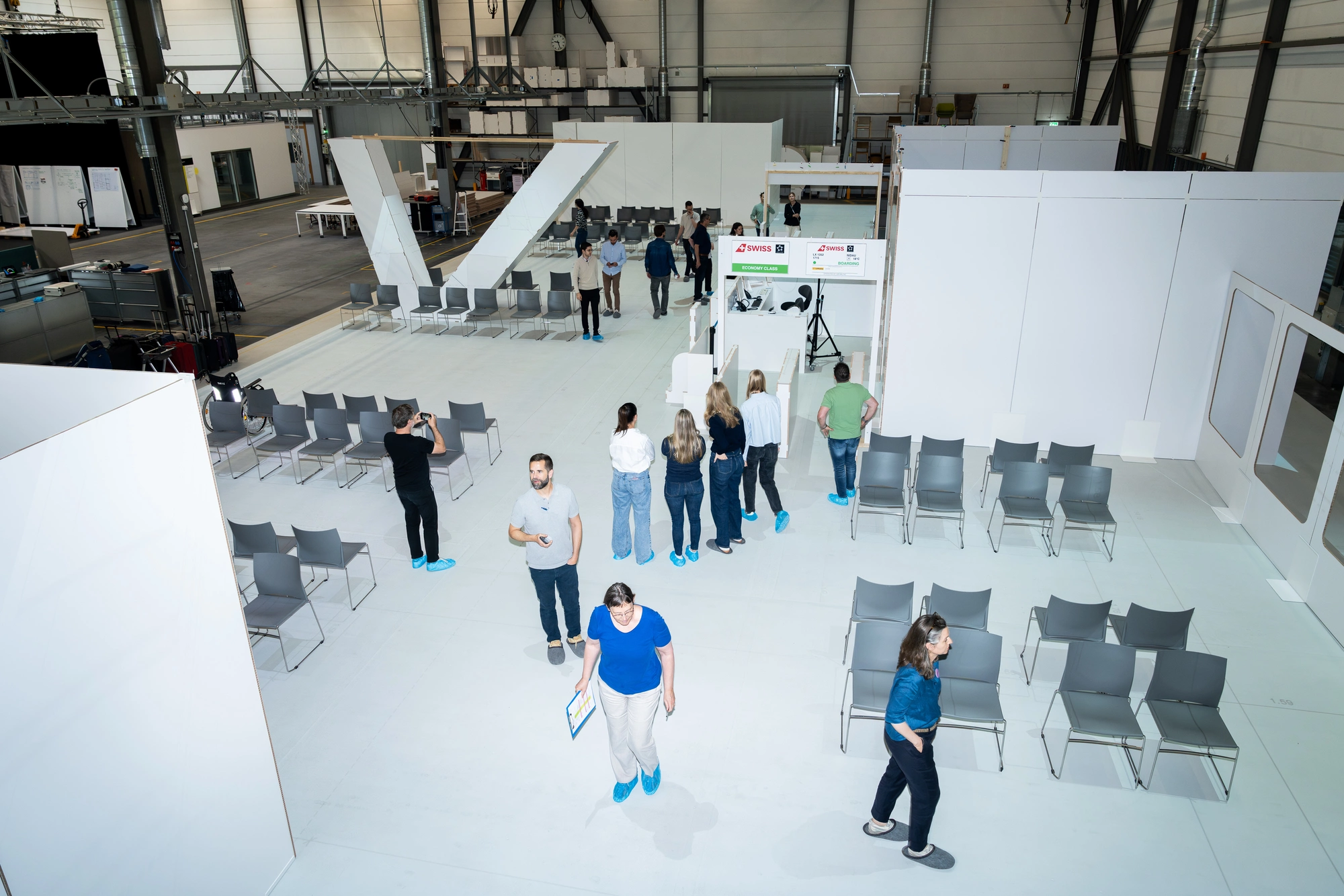
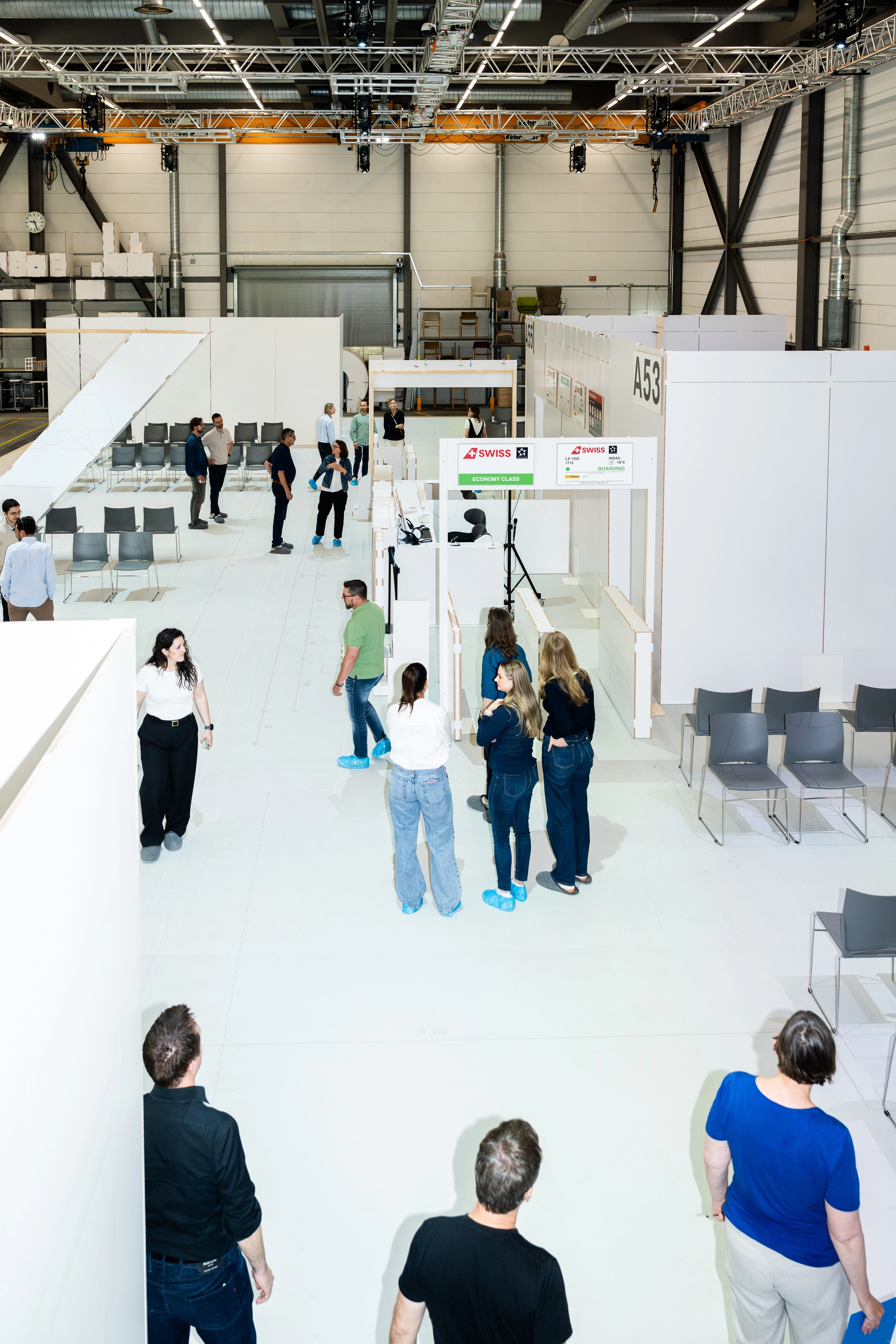
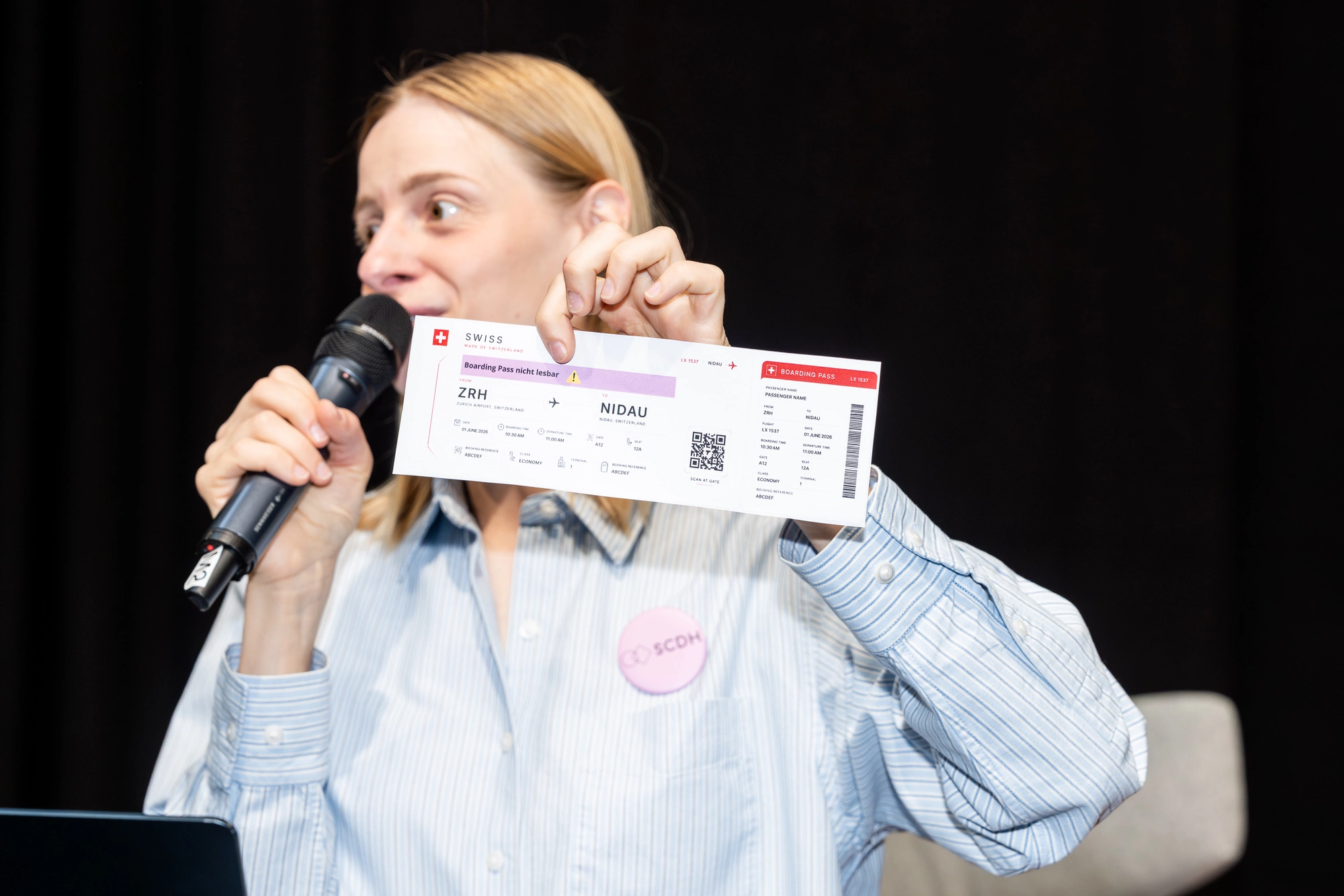
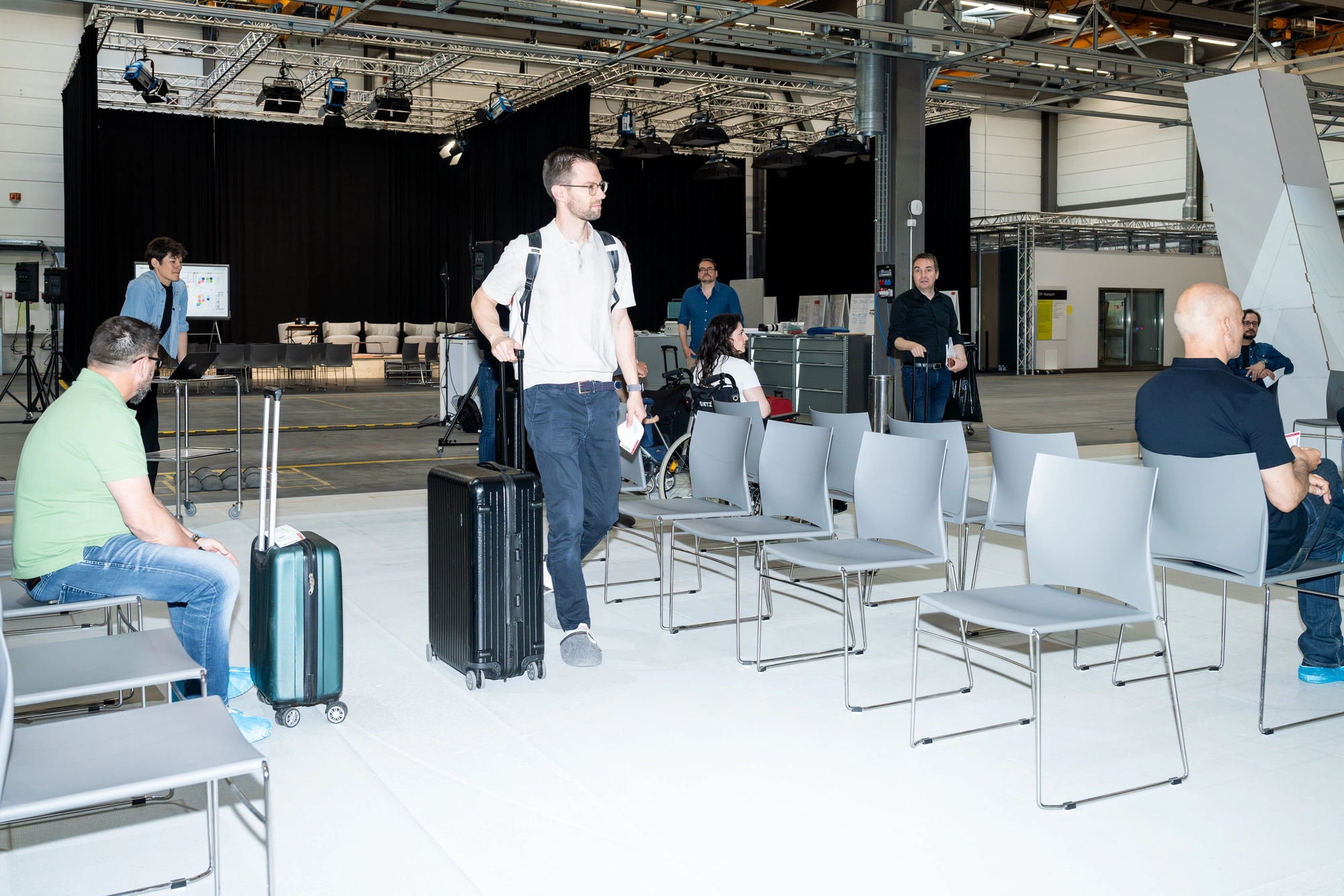
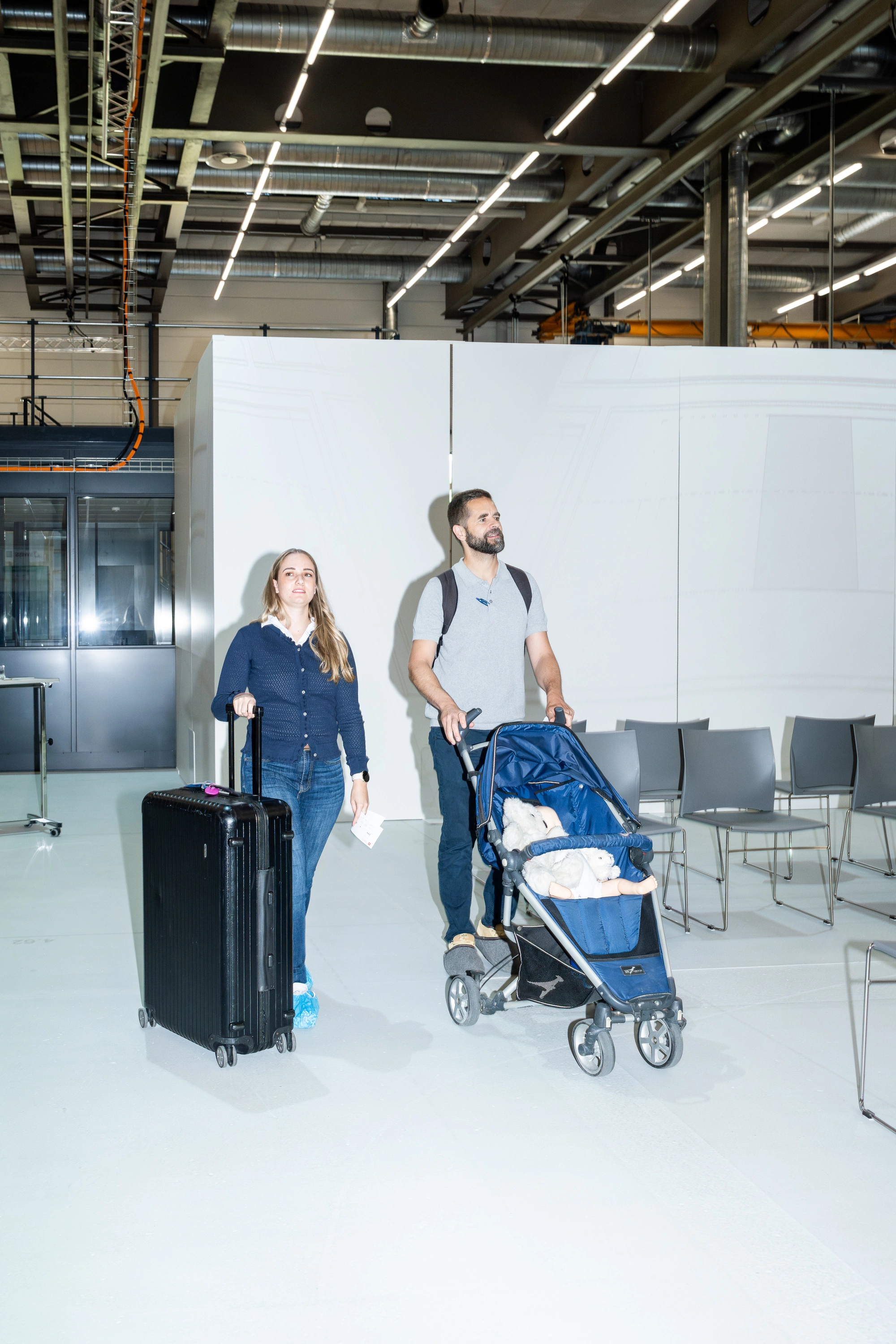
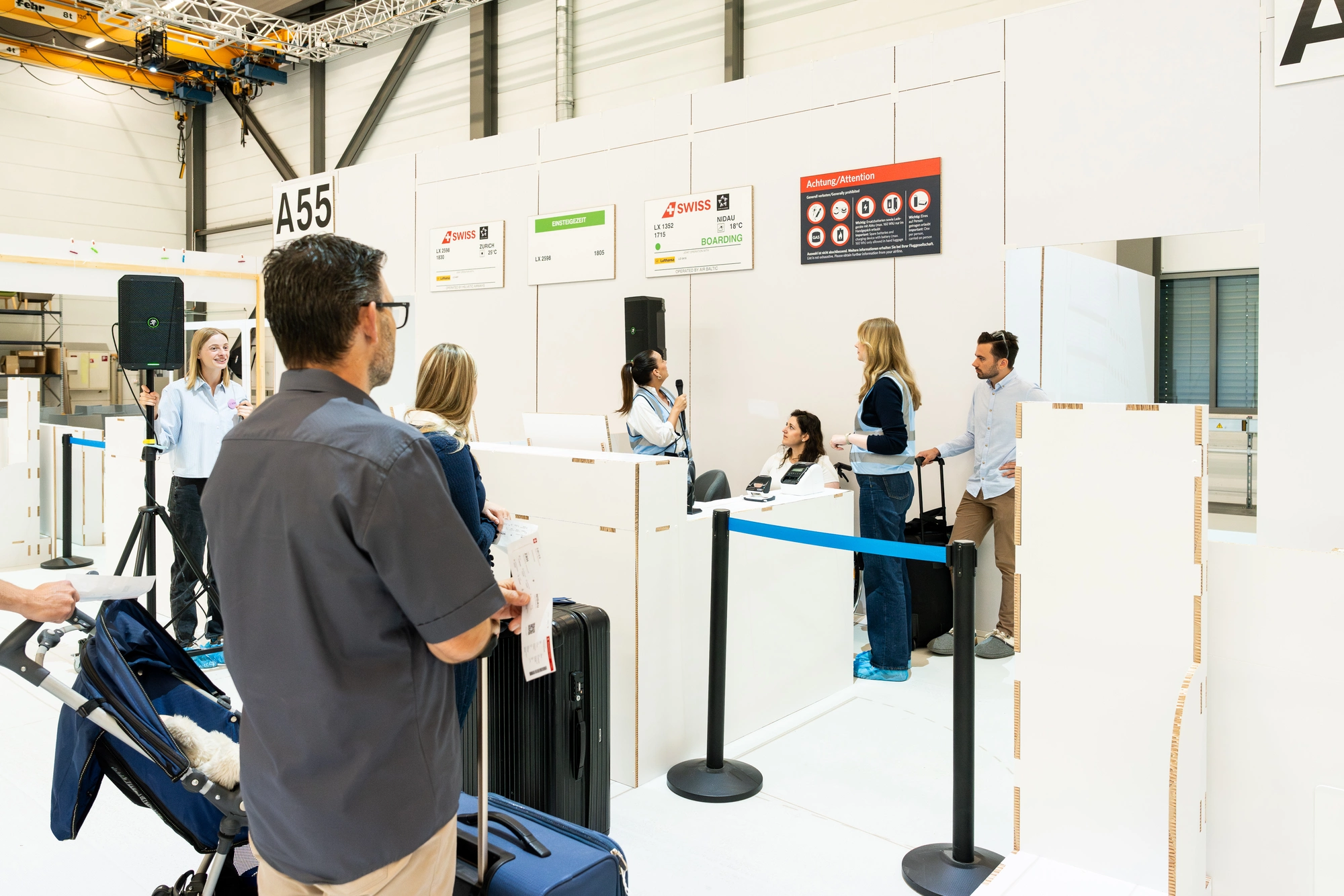
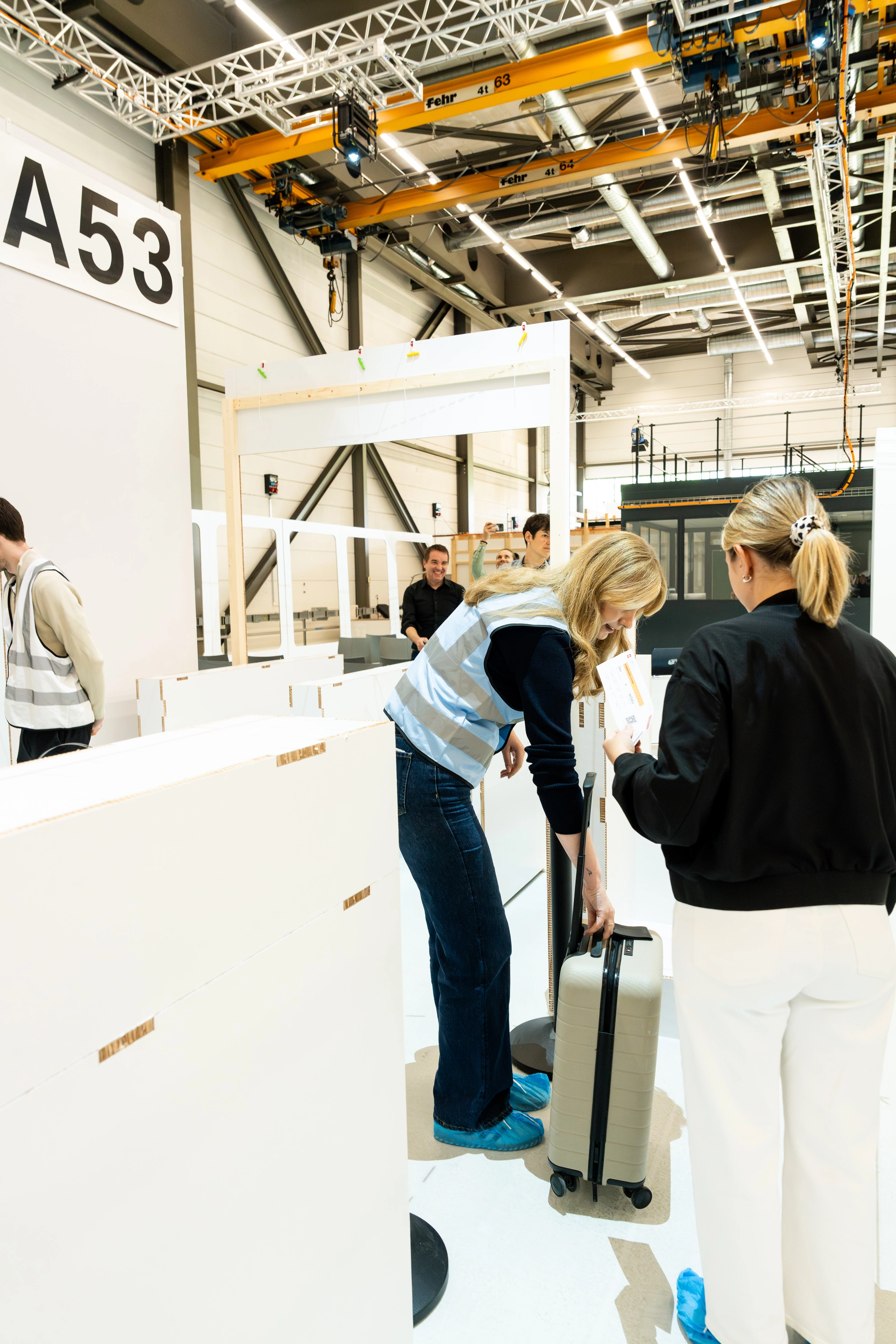
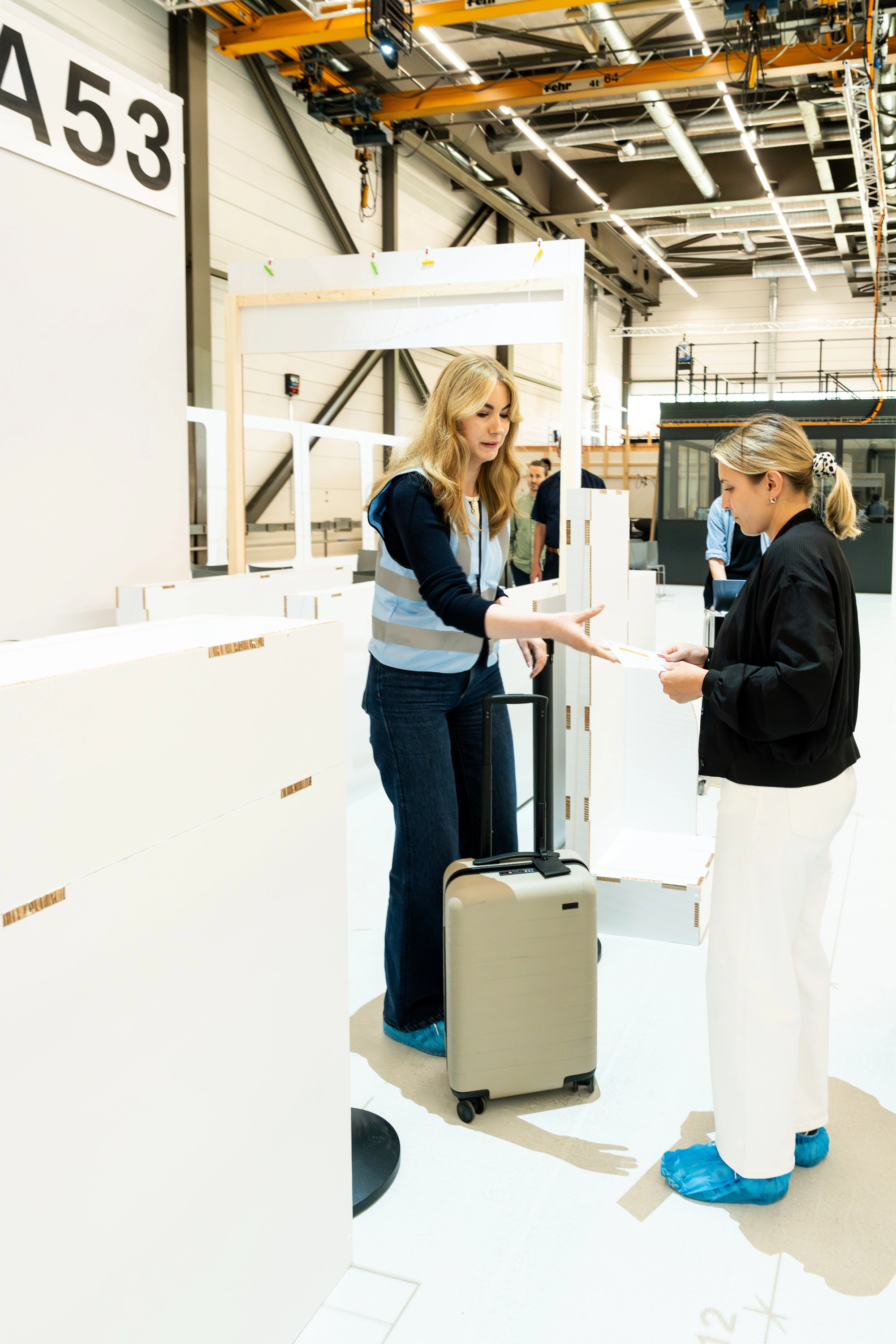
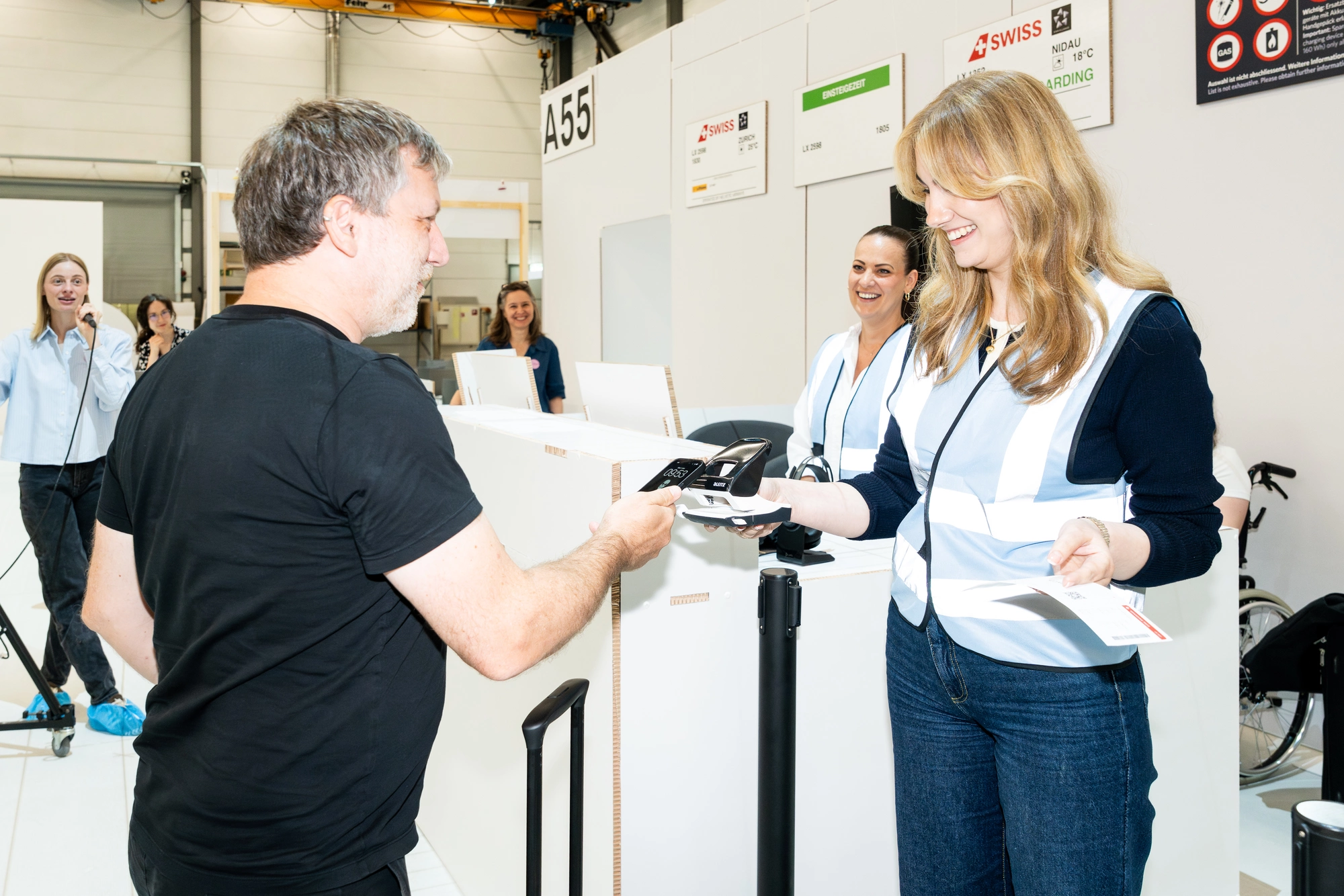
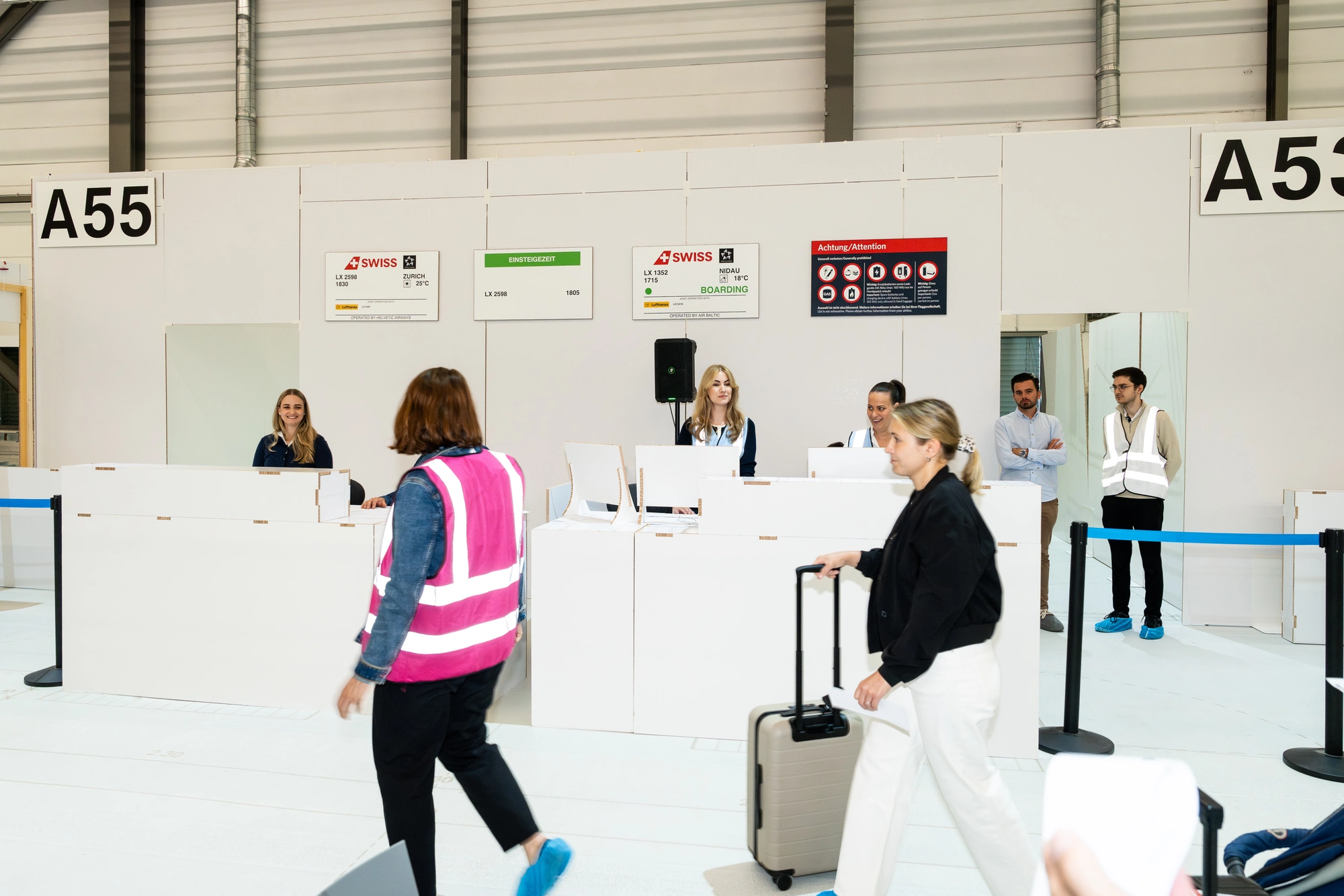
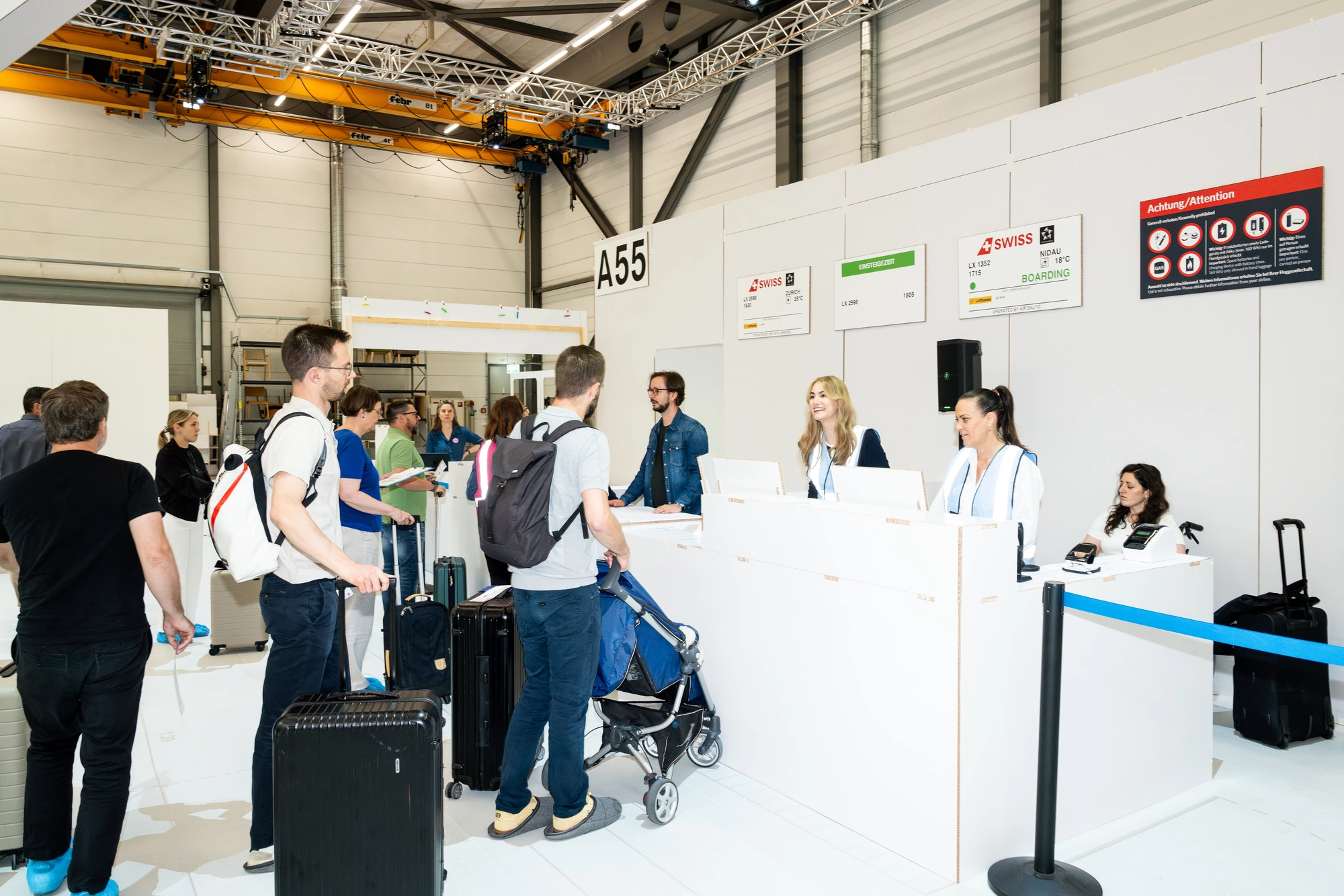
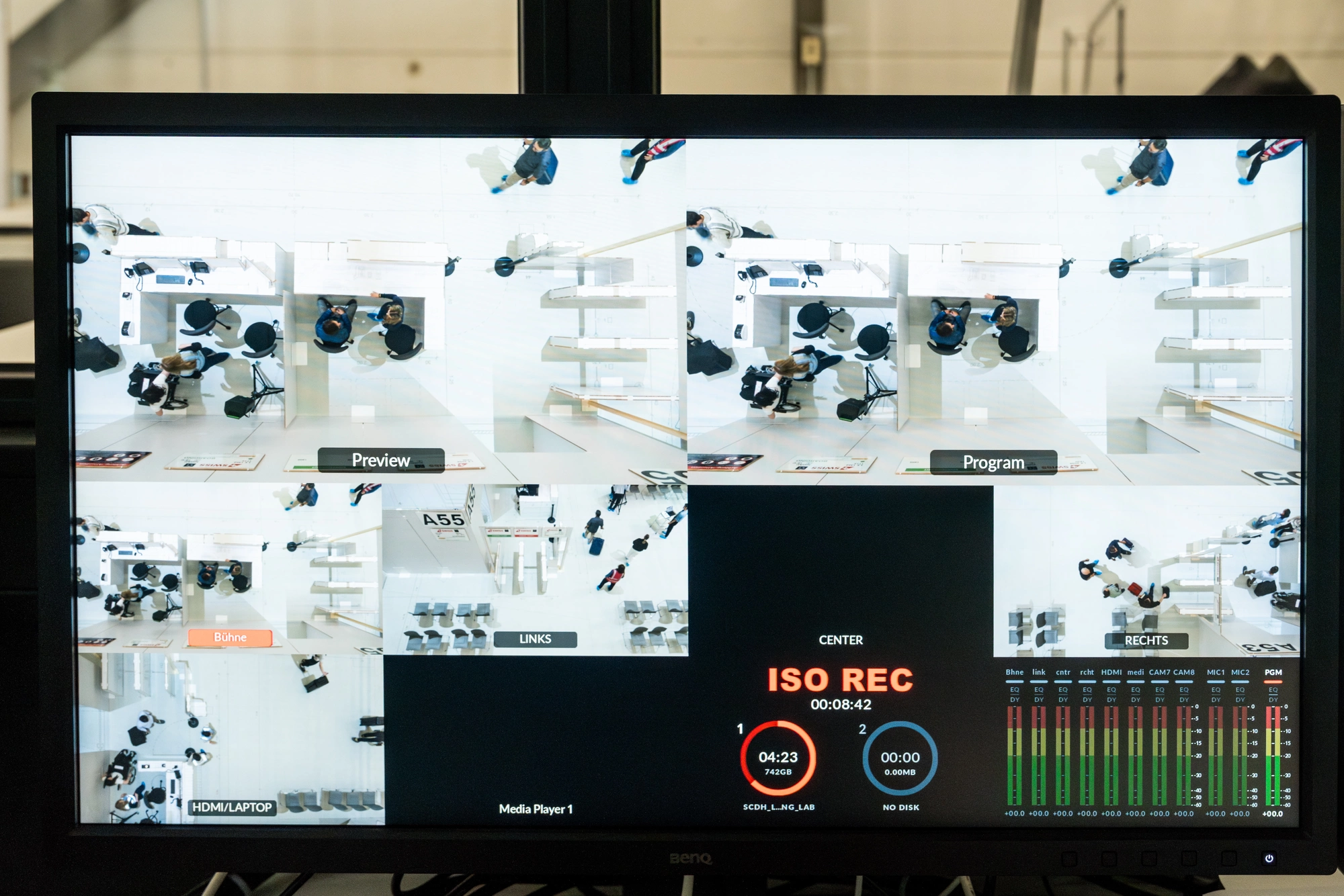
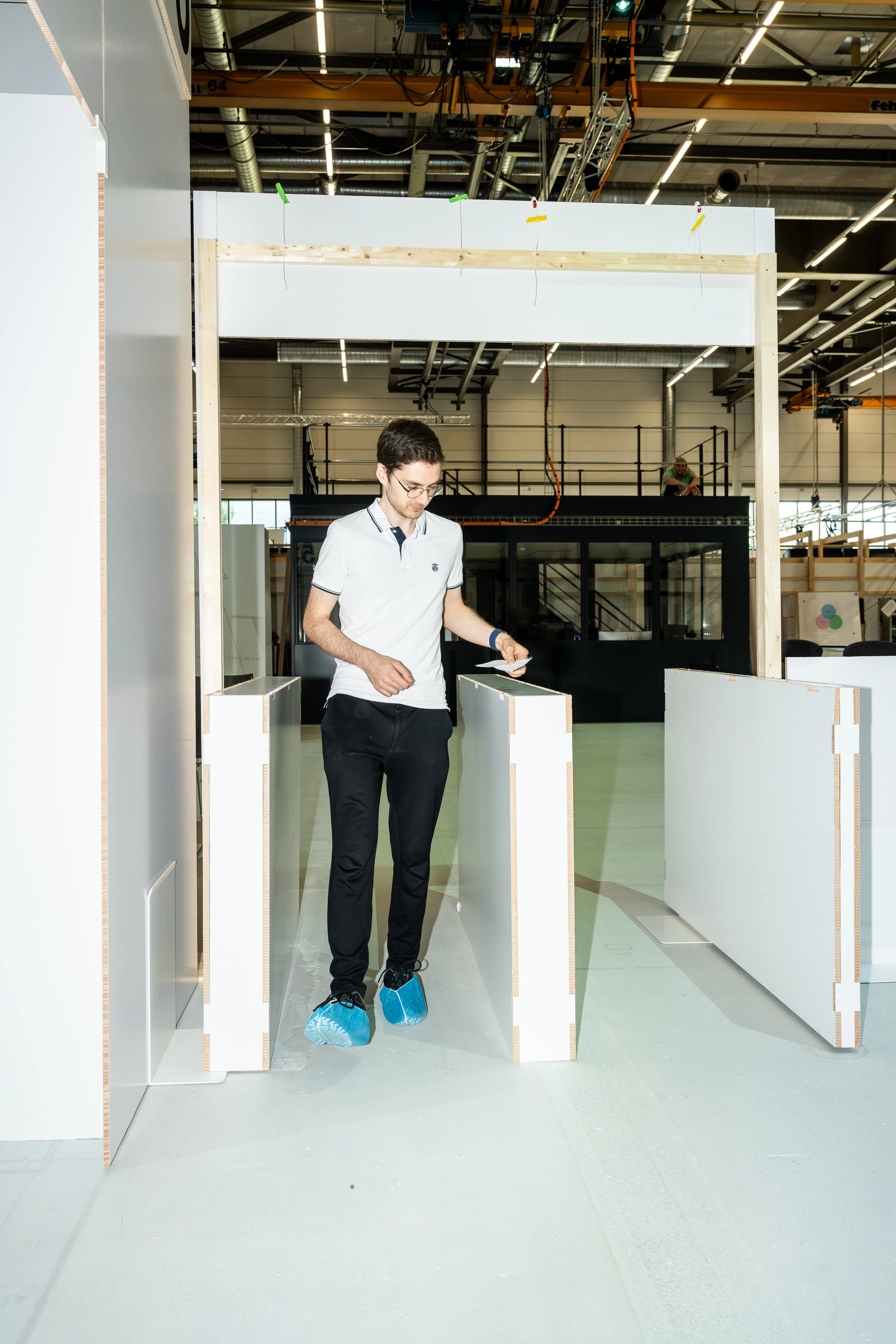
In realistic usage scenarios, spatial configurations, sightlines, workflows and interfaces are reviewed in collaboration with staff from Flughafen Zürich AG, Swissport, Swiss and the commissioned planning team. Planned spaces can be directly experienced through walk-through 1:1-scale projections, cardboard walls, mock-ups and context-specific furniture. To test scenarios for the Schengen and non-Schengen areas – which have different requirements – during the one-day workshop, the simulation area is reconfigured over lunch.
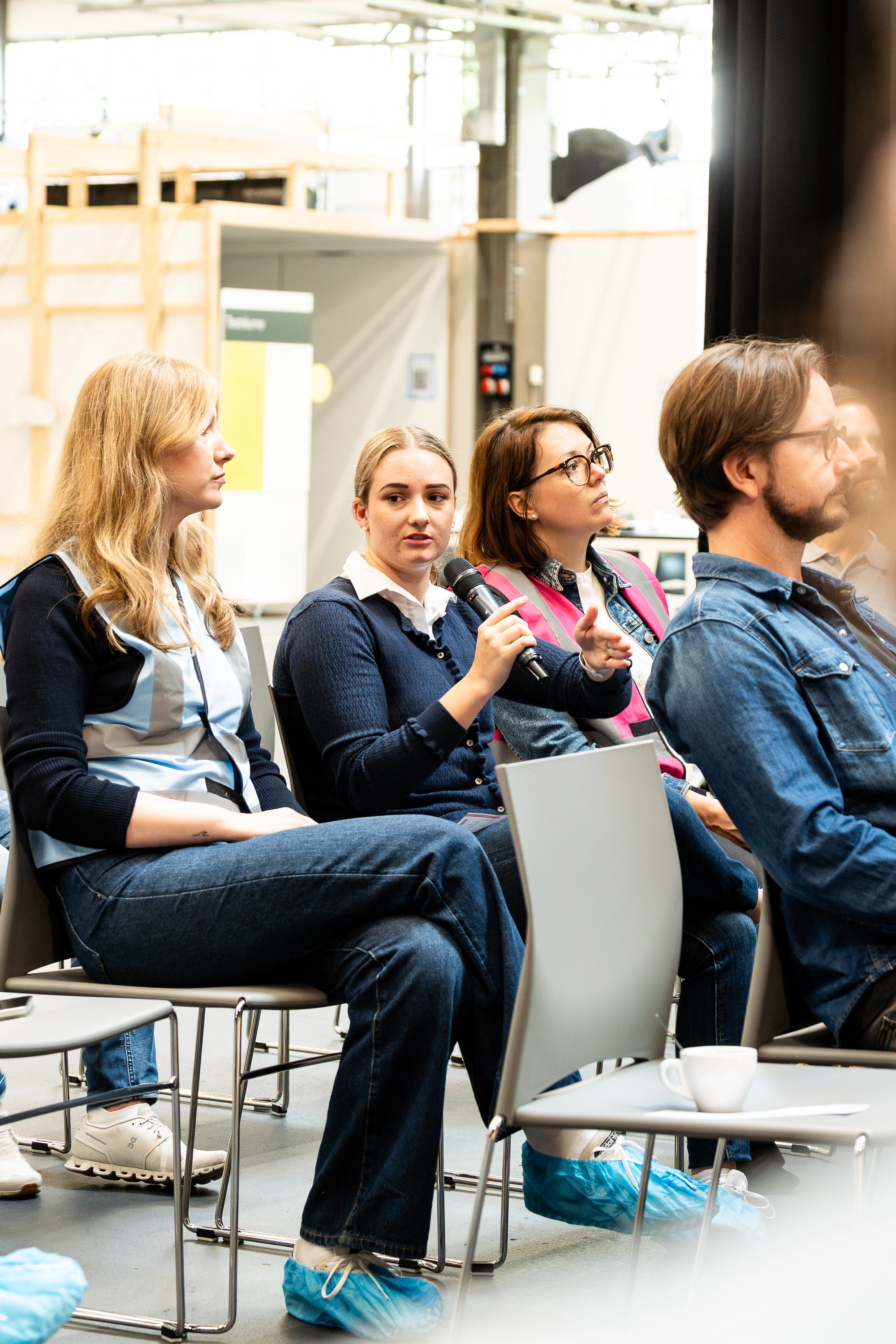
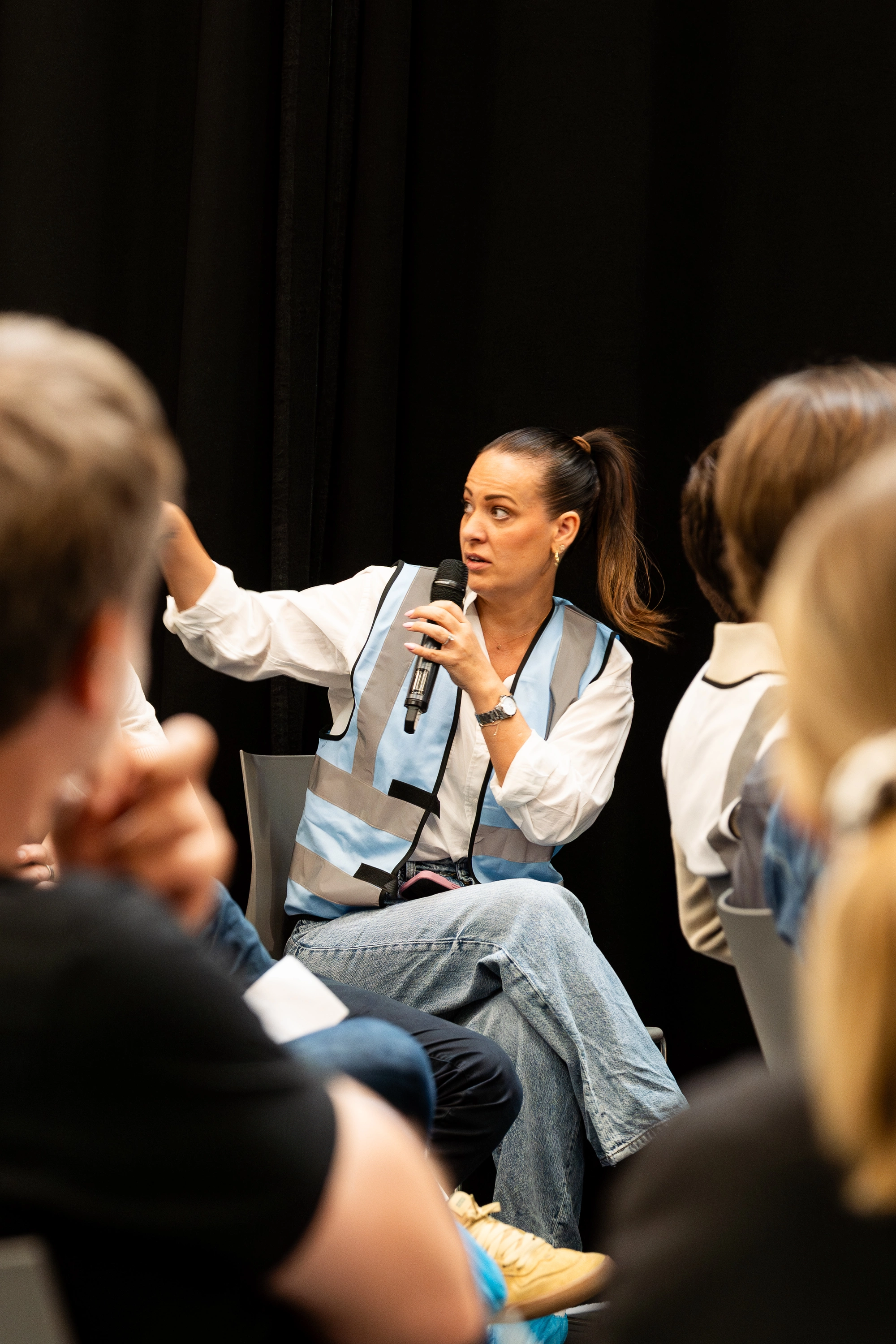
Each simulated scenario is followed by a debriefing based on the observations made and recorded in writing by SCDH staff, as well as the participants’ experiences. The evaluations, discussions and resulting recommendations are recorded and made available to stakeholders for further planning.
“We were sceptical as to whether, with your focus on health, you could also simulate an airport. During the simulation, we felt as though you’d never done anything else.”
“It is a unique experience to see a scale model that has been with us for months in life-size form for the first time. The SCDH has engaged deeply with our aviation world, taking on board its specific procedures, operating conditions and technical terminology, and has enabled us not only to discuss processes but actually to run them through.”

Benefits
- Simulation-based evaluation enables planning assumptions to be tested at an early stage and provides a sound basis for decision-making regarding further project development. Potential weaknesses relating to safety, data protection, spatial impact and processes are identified before any construction work is carried out.
- The active involvement of staff enhances user acceptance and ensures that real-world workflows and needs are incorporated into the planning.
- The simulation helps to reduce planning errors and associated costs.
Gallery

Status
completed
Type of project
Service
Target group
Industry and economy
Area of activity
Objects and environmentSystems and processes
Offering
AnalysisConsultancyTesting
Infrastructure
Simulation area